
Butternut AI Blog
9 Emergent Portfolio Builder Alternatives to Try in 2026
We've curated a list of 9 best AI portfolio builders and compared them so you can pick the right alternative to Emergent.
Introduction
Emergent is one of the more capable AI app builders available. It lets you go from a simple prompt to a working full-stack web and mobile app, complete with a database, authentication, and GitHub integration.
That said, it's not the most practical choice if your main goal is to build and showcase a portfolio. If you're here, you're likely looking for something better matched to your portfolio-specific needs.
TL;DR
- Best overall alternative: Butternut AI
- Best for fast publishing: Gamma
- Best for designers: Figma Make
- Best for full-stack apps: Lovable
- Best for visual storytelling: Visme
Why You Might Be Looking For an Emergent Alternative
- Deployment burns through credits fast: On the Standard plan ($20/month), going live costs approximately 50 credits, which is half your monthly allocation spent before you've done anything else.
- No built-in SEO tools: Emergent doesn't include meta tag control, sitemaps, or keyword guidance. For a portfolio that needs to be found, that's a real problem.
- Credit costs are impossible to predict: There's no way to see how many credits a task will consume before you start it. Complex builds or failed AI attempts drain your balance without warning.
- It's not purpose-built for portfolios: There are no portfolio-specific templates, case study layouts, or project showcase structures. You're adapting a general app builder, not using a tool designed for your use case.
9 Best Emergent Alternatives in 2026
| Tool | SEO | Custom Code / HTML | AI Article Gen | Hosting & Domain Support | Resume Parsing | Lead Capture | Starting Paid Plan |
|---|---|---|---|---|---|---|---|
| Butternut AI | $5/mo | ||||||
| Manus | $20/mo | ||||||
| Gamma | $12/mo | ||||||
| Canva Portfolio Builder | Partial | $15/mo | |||||
| Codedesign.ai | $15/mo | ||||||
| Wix AI Portfolio Generator | $17/mo | ||||||
| Figma Make | Partial | $20/mo | |||||
| Lovable | Partial | $25/mo | |||||
| Visme | Partial | $29/mo |
1. Butternut AI
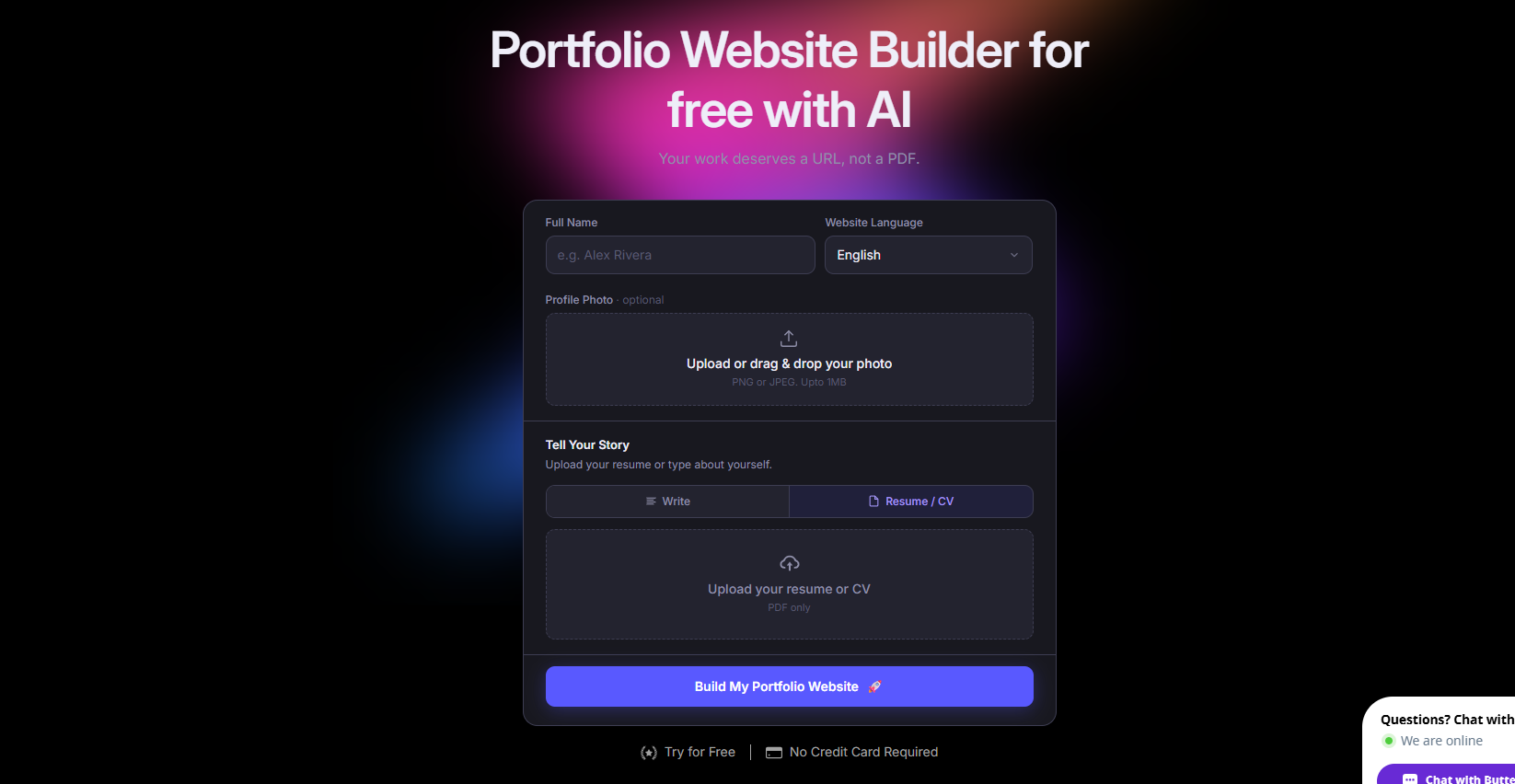
Butternut AI has a dedicated AI Portfolio Builder, not just a generic site generator you're adapting for portfolio use. You describe your work, and it builds a complete portfolio site in roughly 20 seconds, pulling in structure, copy, and layout all at once. It also imports your resume to auto-populate your portfolio sections, which cuts out a lot of the manual setup that slows you down on other platforms.
Where Emergent struggles with discoverability, Butternut AI handles SEO out of the box. Meta tags, sitemaps, and keyword guidance are all built in.
- Resume import to auto-populate portfolio sections, skipping the blank-page problem entirely.
- Built-in AI blog writer for generating SEO content at scale.
- Automated SEO with meta tags, sitemaps, and keyword guidance included on all plans.
- AI agents for social media marketing on Facebook, LinkedIn and Instagram.
Best For: Designers, photographers, freelancers, and creative professionals who want a portfolio live quickly without configuring a full-stack app environment or worrying about running out of credits.
Pricing:
| Plan | Price |
|---|---|
| Free | Available (build and test, no custom domain) |
| Starter | $5/mo |
| Pro | $12/mo |
2. Manus
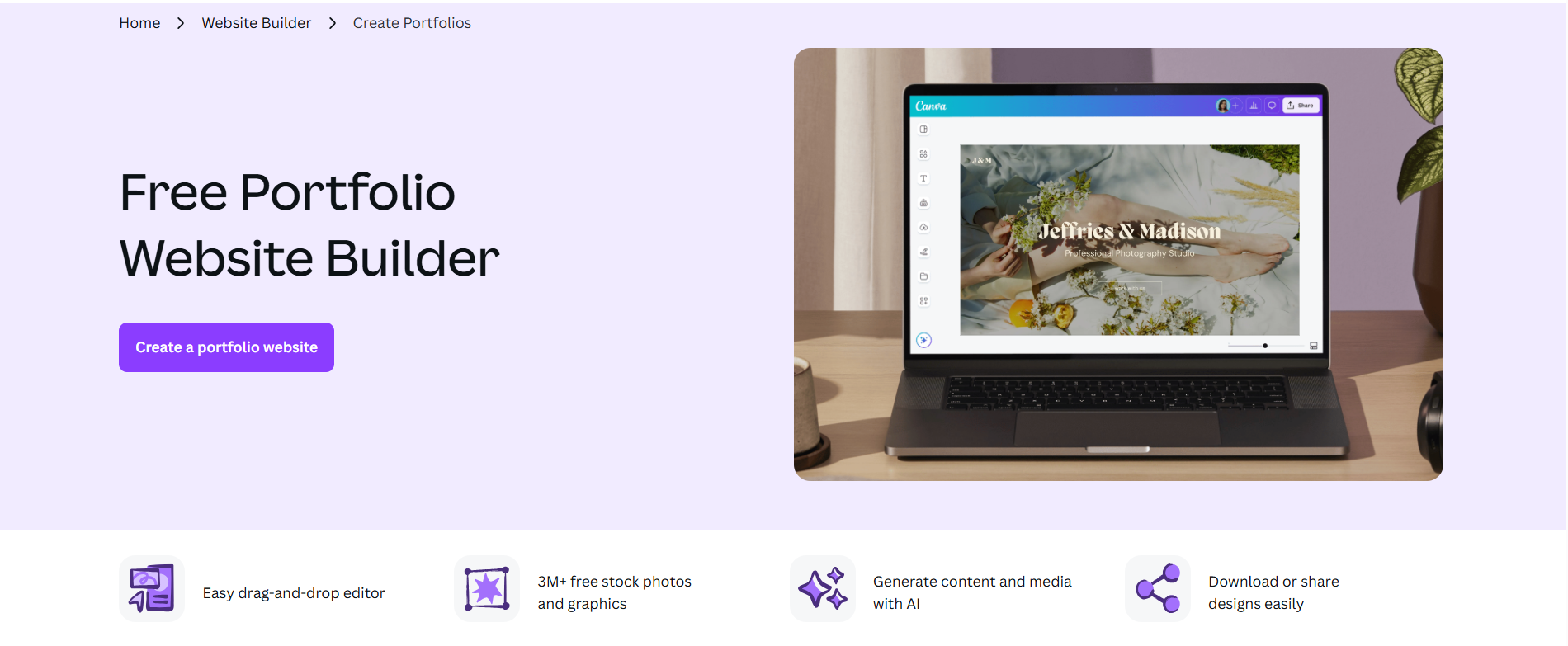
Manus is a research-first autonomous AI agent that builds full-stack portfolio websites from conversational prompts. Before generating anything, it analyzes design principles and current trends, which tends to produce higher-quality visual output than tools that jump straight to templating. It handles the entire technical stack automatically. The code, database, authentication, and hosting are all configured without you touching a single setting. Compared to Emergent, Manus produces more polished design output from the start.
- Conversational AI agent that researches design trends before generating your portfolio, not just filling a template.
- Full-stack generation where code, database, authentication, and hosting are all auto-configured from a single prompt.
- Figma-to-site integration for designers who already have assets ready.
- Stripe payment integration for portfolio sites that also sell services.
- Integrations with Slack, Gmail, GitHub, and Google Calendar.
Best For: Developers, engineers, and technical creatives who want a premium-looking portfolio generated from scratch without writing code, and who don't mind a credit-based workflow.
Pricing:
| Plan | Price |
|---|---|
| Free | 300 daily refresh credits, 1 concurrent task |
| Standard | $20/mo |
| Customizable | $40/mo |
| Extended | $200/mo |
3. Gamma
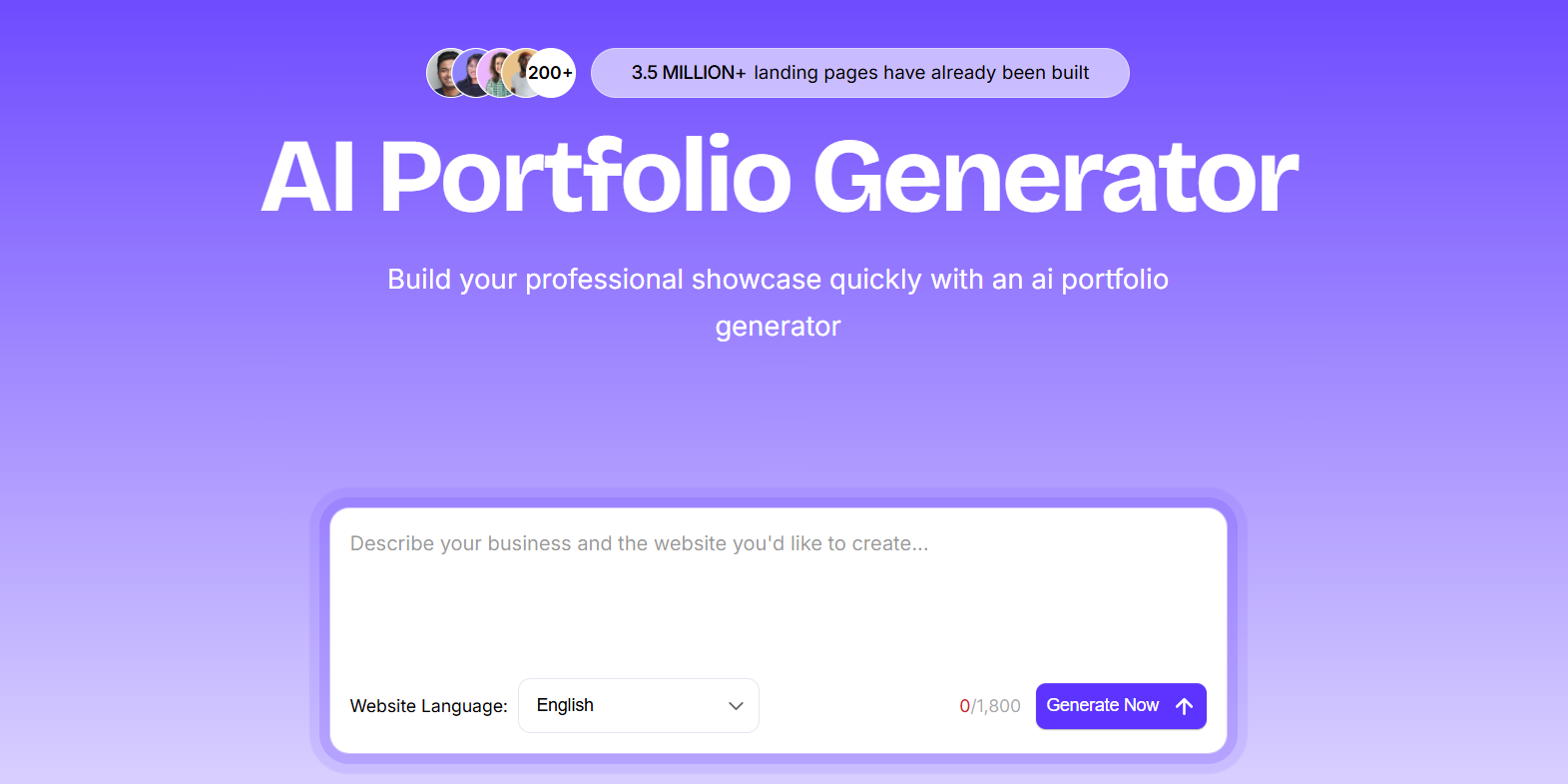
Gamma is built around speed. It generates and publishes a live portfolio page in under 60 seconds from a text prompt. For portfolio use, it generates web-native pages, landing pages, and case study sites from prompts or from documents you upload, including PDF, Word, PowerPoint, or a URL.
Against Emergent, Gamma is significantly easier to use and considerably cheaper at entry level. It won't build you a full-stack app, but if your goal is a polished, published portfolio page that loads fast and looks professional, Gamma gets you there without any friction.
- Import from PDF, PPTX, Word, or URL to generate a portfolio from existing work.
- Google Indexing for published sites so your work can actually show up in search.
- API access for programmatically generating portfolio pages at scale.
- Export to PDF, PowerPoint, PNG, and Google Slides.
Best For: Consultants, marketers, researchers, and content professionals who need a professional-looking portfolio or case study site published quickly, without a steep learning curve.
Pricing:
| Plan | Price |
|---|---|
| Free | $0 (400 AI credits, Gamma branding on published sites) |
| Plus | $12/mo |
| Pro | $25/mo |
| Ultra | $100/mo |
4. Canva Portfolio Builder
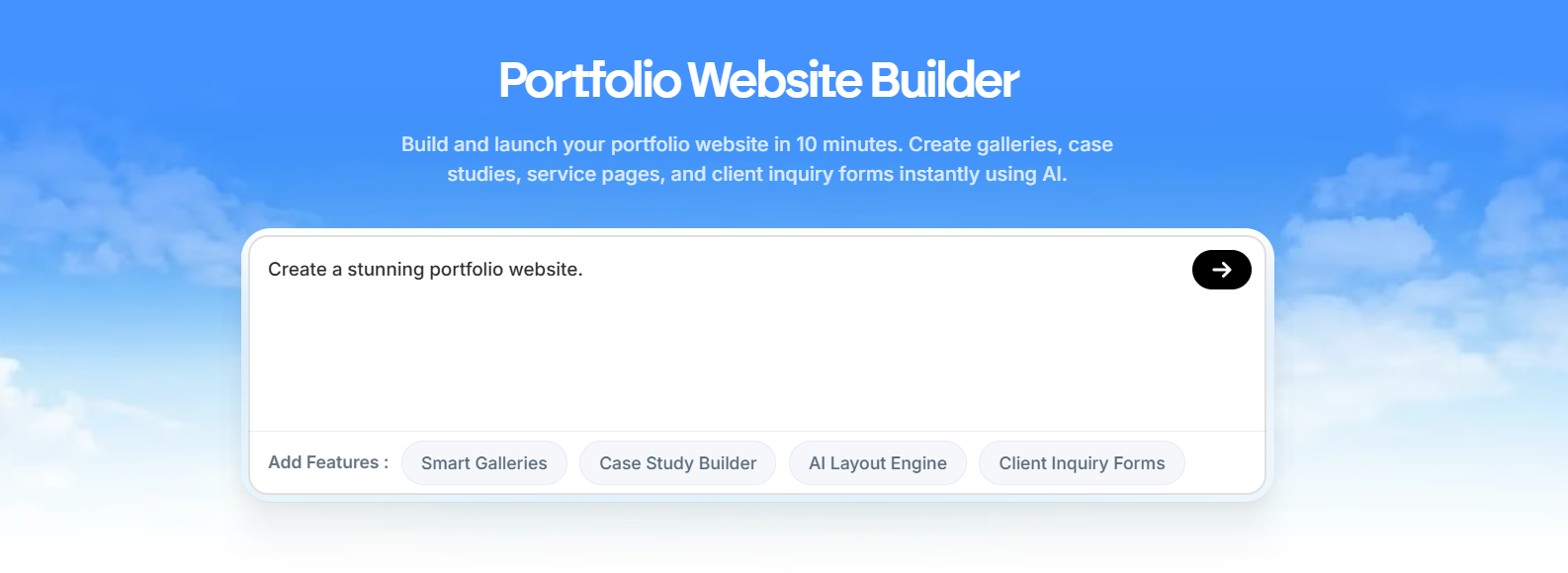
Canva is a widely used design platform, and its Canva Websites feature lets you build and publish a portfolio directly from the same tool you use for social media, presentations, and documents. The Magic Studio AI suite handles image generation via Dream Lab, copywriting via Magic Write, background removal, and more, all without leaving the platform.
What makes Canva stand out from Emergent for portfolio use is sheer template volume and design accessibility. With 250,000+ templates and a drag-and-drop editor that most people can pick up in minutes, the barrier to a polished result is much lower.
- 250,000+ portfolio and design templates, far more variety than most purpose-built portfolio tools.
- Magic Studio AI suite covering text-to-image generation, AI copywriting, background removal, and image expansion.
- Brand Kit for applying consistent fonts, colors, and logos across your entire portfolio.
- 100M+ stock photos, illustrations, and videos available in the editor.
Best For: Graphic designers, illustrators, educators, and visual creatives who already use Canva and want to extend their workflow into a published portfolio without adopting a new tool.
Pricing:
| Plan | Price |
|---|---|
| Free | $0 (250,000+ templates, 5GB storage, basic AI tools) |
| Pro | $15/mo |
| Teams | $21/user/month (billed monthly) |
| Enterprise | Custom pricing |
5. Codedesign.ai
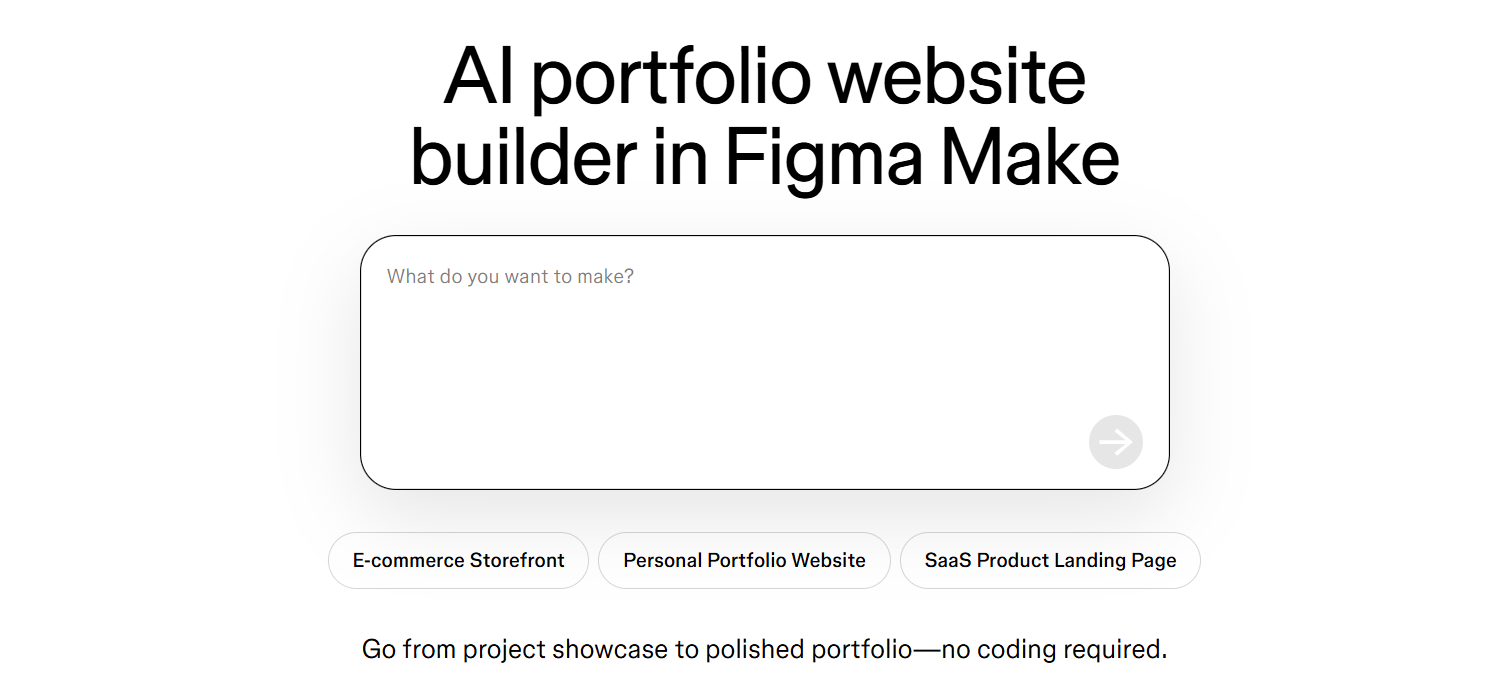
Codedesign.ai is an AI website and portfolio builder that generates clean, responsive portfolio sites from a prompt in seconds. What sets it apart is publishing flexibility: you can publish to their cloud hosting, export your code as HTML/CSS or React, or push directly to WordPress via plugin, all three from the same platform.
Compared to Emergent, Codedesign.ai is dramatically simpler to use and far more affordable.
- Publish to Codedesign hosting, export to WordPress, or export full HTML/CSS and React code, your choice.
- No vendor lock-in so you own your code and can take it anywhere.
- AI Magic for generating and rewriting portfolio copy within the builder.
- Built-in analytics and auto-backups included on all plans.
- Form data collection with Zapier integration.
- 1,000+ templates covering portfolios, SaaS, landing pages, and funnels.
Best For: Developers, freelancers, and agencies who want an AI-generated portfolio they can also export and self-host, particularly useful if you work with WordPress clients or want to avoid long-term platform dependency.
Pricing:
| Plan | Price |
|---|---|
| Free | Available (up to 2-3 websites, subdomain hosting, 1 custom domain) |
| Individual | $15/mo |
| Growth | $29/mo |
| Agency | $99/mo |
6. Wix AI Portfolio Generator

Wix's dedicated AI portfolio generator uses conversational AI via Aria and image-clustering technology to build a portfolio from uploaded media and a prompt, automatically categorizing your work into titled projects with AI-written descriptions. One genuinely unique feature is that it's the only major portfolio builder that tracks AI search visibility, showing how your portfolio appears in ChatGPT, Perplexity, and Claude searches alongside traditional SEO metrics.
Compared to Emergent, Wix is purpose-built for portfolio presentation rather than app development. The 900+ template library, centralized media dashboard, and mobile app for on-the-go editing are practical advantages for creatives managing their portfolio as an ongoing asset.
- AI image-clustering that automatically organizes uploaded work into titled projects with written descriptions.
- AI search visibility tracking so you can see how your portfolio surfaces in ChatGPT, Perplexity, and Claude.
- 900+ templates with a full drag-and-drop editor.
- Built-in email marketing, social media tools, and Google Analytics.
- Mobile app for managing and updating your portfolio from anywhere.
Best For: Photographers, UX designers, architects, and other visual creatives who want a portfolio builder with genuine media management depth and care about showing up in both traditional and AI-powered search.
Pricing:
| Plan | Price |
|---|---|
| Free | Full editor + AI tools, Wix branding and subdomain |
| Light | $17/mo |
| Core | $29/mo |
| Business | $36/mo |
| Business Elite | $159/mo |
7. Figma Make
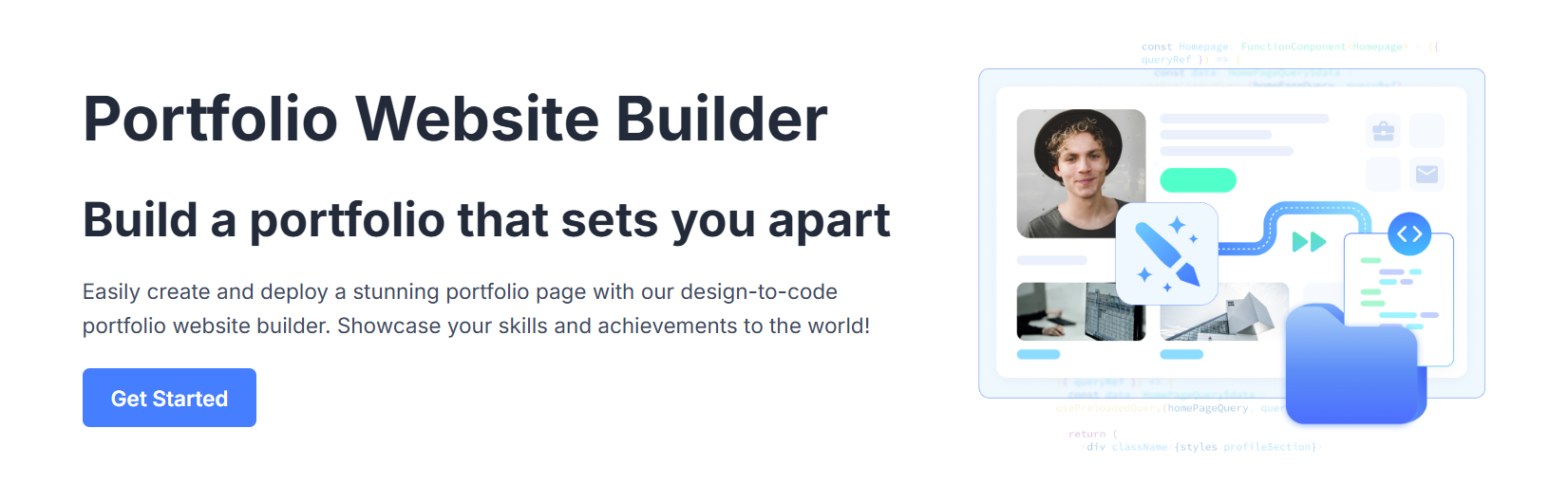
Figma Make is an AI portfolio and website builder embedded directly inside Figma, the design tool used by most professional product designers and UX teams. It generates UI screens and full portfolio sites from text prompts using your existing Figma component libraries, which means the output is already on-brand rather than requiring post-generation cleanup. Figma Sites then lets you publish those designs as live websites directly from the same file you're designing in.
This is a fundamentally different proposition from Emergent. Emergent is for developers who want to build apps. Figma Make is for designers who want to publish their work without handing it off to a developer. If Figma is already your primary tool, Make is a natural extension rather than a new product to learn.
- Generates UI using your existing Figma component libraries so output matches your brand system from the start.
- Figma Sites that publishes designs as live portfolio sites without leaving Figma.
- Interactive prototype creation with clickable elements, built into the same workflow.
- Supabase database integration for live data preview inside designs.
- Real-time collaboration across the entire design and publishing workflow.
Best For: UX designers, product designers, and design agencies who already work in Figma and want to publish portfolio sites without switching tools or managing a separate deployment pipeline.
Pricing:
| Plan | Price |
|---|---|
| Starter | Free (150 AI credits/day) |
| Professional (Full seat) | $20/mo |
| Dev seat | $12/mo |
| Collab seat | $3/mo |
| Organization | $55/mo per seat (annual only) |
| Enterprise | $90/mo per seat (annual only) |
8. Lovable
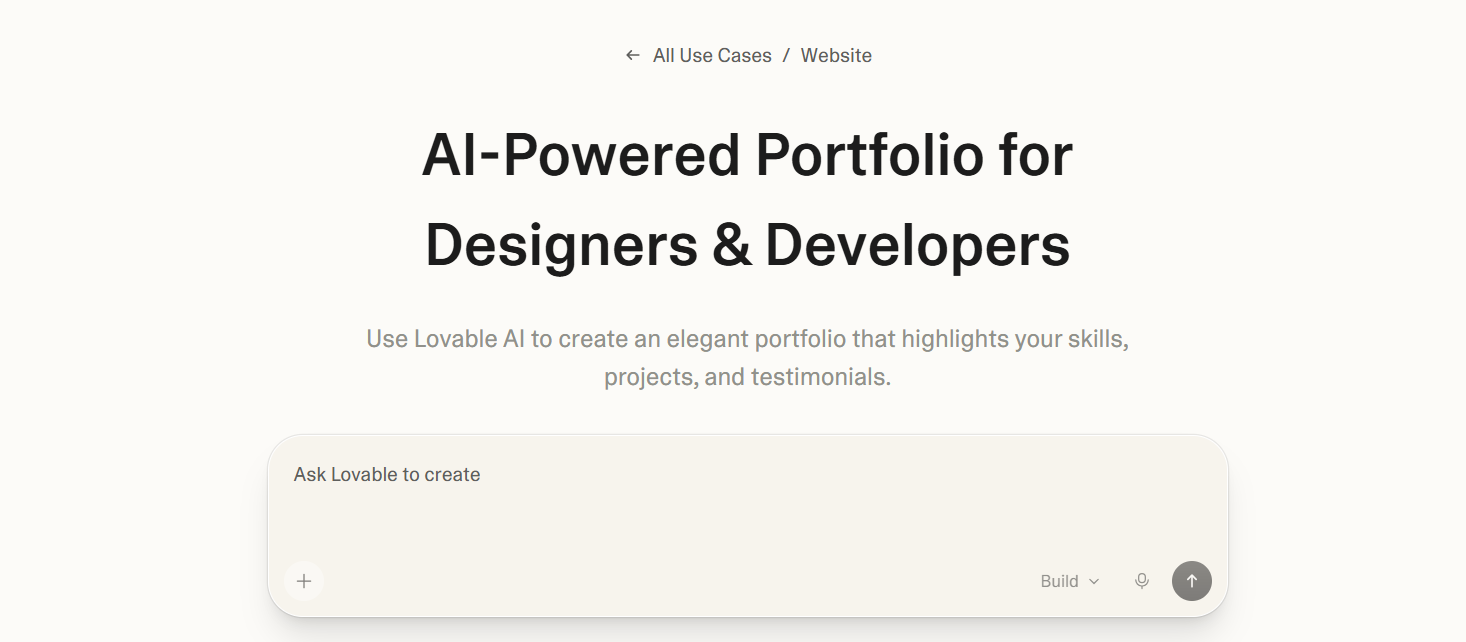
Lovable is a full-stack web app builder that generates React and TypeScript applications from natural language prompts, with Supabase handling the backend. A fully functional UI with a Supabase backend can be up in under 10 minutes, with GitHub sync and one-click deployment included. For portfolios with interactive elements, including a contact form with a database, a custom booking flow, or a 3D product viewer, Lovable gives you capabilities most portfolio builders can't match.
- Generates React, TypeScript, and Supabase apps from a single text prompt.
- GitHub sync so your code is always yours to export and deploy independently.
- 3D viewer for product and portfolio showcases, a rare feature at this price point.
- Visual editor for no-code UI adjustments after initial generation.
- Real-time collaboration on public projects with up to 20 collaborators on the free plan.
- Figma design import to convert your mockups into working components.
Best For: Developers, startup founders, and technically-inclined designers who want a portfolio that functions as a proper web application, with a real backend, custom logic, and the option to self-host.
Pricing:
| Plan | Price |
|---|---|
| Free | $0 (5 credits/day, unlimited public projects) |
| Pro | $25/mo |
| Business | $50/mo |
| Enterprise | Custom pricing |
9. Visme
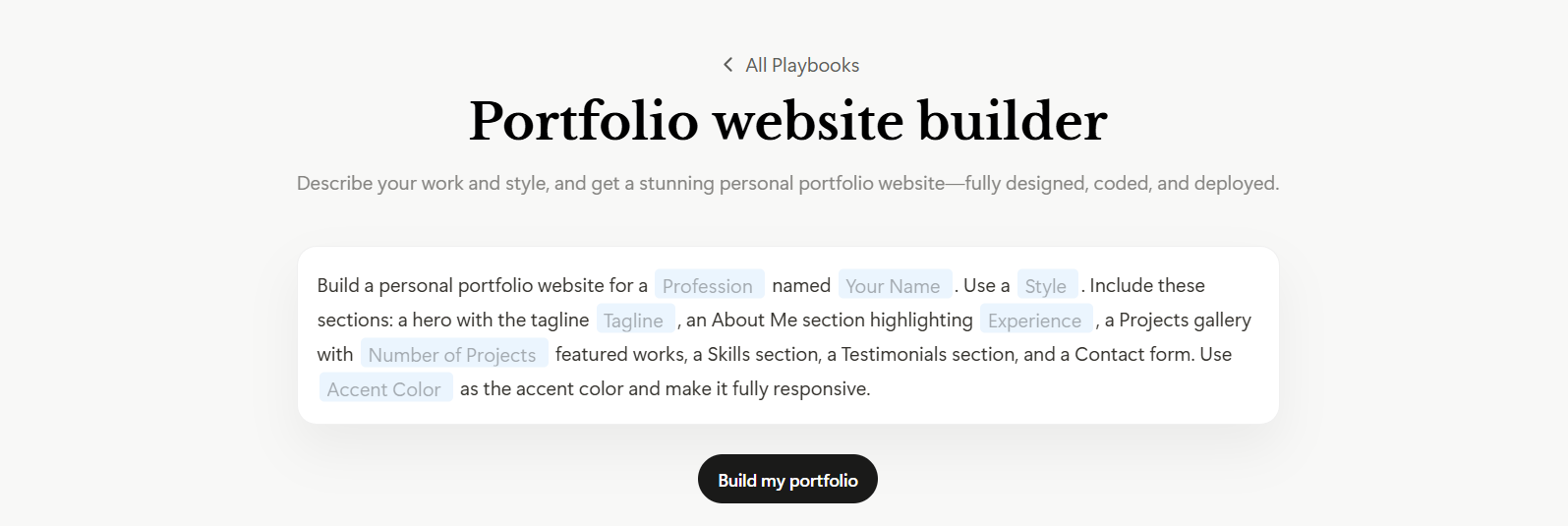
Visme is a visual content platform that handles presentations, infographics, reports, social graphics, and portfolio-style websites under one subscription. For portfolio use, it's most useful when your work involves data storytelling. Its live data integration pulls metrics from Google Sheets, Salesforce, and HubSpot, meaning portfolio case studies can display auto-updating numbers rather than static screenshots.
Compared to Emergent, Visme is much easier to use and better suited for business-focused portfolios. Where Emergent is oriented around app development, Visme is built around professional communication, making it a better fit for consultants, analysts, and business professionals whose portfolio work involves data, reports, and presentations rather than code or design files.
- Live data integration with Google Sheets, Salesforce, and HubSpot so charts and metrics update automatically.
- Brand Wizard that extracts your brand assets including colors, fonts, and logo from any website URL.
- 16+ chart types including Mekko, waterfall, and Gantt for data-heavy case studies.
- Presenter Studio for recording screen and voiceover walkthroughs within the platform.
- Publish as a live URL, embed on any site, or download in multiple formats.
Best For: Consultants, data analysts, marketers, and business professionals whose portfolio work involves metrics, reports, and presentations, particularly those who need live data in their case studies.
Pricing:
| Plan | Price |
|---|---|
| Free | $0 (limited projects, JPG downloads only, Visme watermark) |
| Starter | $29/mo |
| Pro | $59/mo |
| Enterprise | Custom pricing |
How to Make the Right Choice
The right alternative depends on what Emergent is specifically failing to give you. Here are a few factors worth thinking through before you commit to a new tool:
- What you're actually building: If you need a full-stack web app with a database and authentication, look at the more technically capable tools on this list. If you need a portfolio showcase, most of the other options here are better fits.
- SEO matters for your work: If you need your portfolio to be discoverable, prioritize tools that include proper meta control, sitemaps, and search optimization.
- Your design starting point: If you're already designing in a specific tool, look for builders that integrate with your existing workflow. If you're starting from scratch with no design assets, a prompt-to-site tool will get you further faster.
Our Suggestion
If your goal is a portfolio that's live, discoverable, and easy to keep updated, without burning through credits or configuring a full-stack environment, Butternut AI is the most practical starting point.
The dedicated portfolio builder mode means you're not adapting a general-purpose tool. It's designed for showcasing creative and professional work. Resume import handles the initial content population, automated SEO handles discoverability, and the editing experience is direct enough that updating your portfolio later doesn't become a chore.
You can build for free and only pay when you're ready to publish with a custom domain. For most people switching away from Emergent, that's a cleaner and more cost-predictable path forward.