
Butternut AI Blog
9 Lovable Alternatives for Building AI Portfolios in 2026
Looking for a Lovable alternative for building your portfolio? We've compared 8 AI portfolio builders so you can pick the right one.
Introduction
Lovable is one of the more capable AI app builders out there right now. You describe what you want, and it generates a working React and TypeScript application, complete with a Supabase backend, authentication, and one-click deployment. For developers and technical users who want to spin up a portfolio fast without writing everything from scratch, it genuinely delivers.
That said, Lovable was built for app development, not portfolio creation specifically. If you've tried using it for a portfolio, you've probably run into the credit burn problem or just a general feeling that the tool is more than what you actually need. Whatever's pushing you to look elsewhere, there are better-suited options depending on what you're actually trying to build.
TL;DR
- Best overall alternative: Butternut AI
- Best for speed and simplicity: Gamma
- Best for design-heavy portfolios: Canva Portfolio Builder
- Best for designers already using Figma: Figma Make
- Best for full-stack agentic builds: Manus
Why You Might Be Looking For a Lovable Alternative
- Credits disappear faster than expected: Lovable's credit system is unpredictable. Fixing AI errors, iterating on design, and deploying all draw from the same pool. Users regularly burn through their monthly allocation before the month ends, effectively paying for the AI's mistakes.
- You need a second platform just to go live: Lovable requires Supabase for any serious backend functionality. That means a separate account, separate billing, and more configuration than most portfolio builders expect you to manage.
- It wasn't built for portfolios. There are no portfolio-specific templates, no case study layouts, and no structured project page formats. You're starting from a blank app context, which adds unnecessary work for something as specific as a portfolio site.
- Minimal built-in SEO. Lovable offers only basic SEO functionality. If organic search visibility matters for your portfolio, you'll need to handle that outside the platform.
8 Best Lovable Alternatives in 2026
| Tool | AI Generation | Custom Domain | Hosting Included | Resume Import | Automated SEO | Starting Paid Plan |
|---|---|---|---|---|---|---|
| Butternut AI | Free 1st year | $5/month | ||||
| Manus | $20/month | |||||
| Figma Make | Yes (Figma Sites) | Partial | $20/month | |||
| Wix AI Portfolio Generator | Free 1st year | $17/month | ||||
| Gamma | Yes (Pro) | $12/month | ||||
| Canva Portfolio Builder | Yes (Pro) | Basic | $15/month | |||
| Emergent | $20/month | |||||
| Visme | Yes (Pro) | Basic | $29/month |
1. Butternut AI
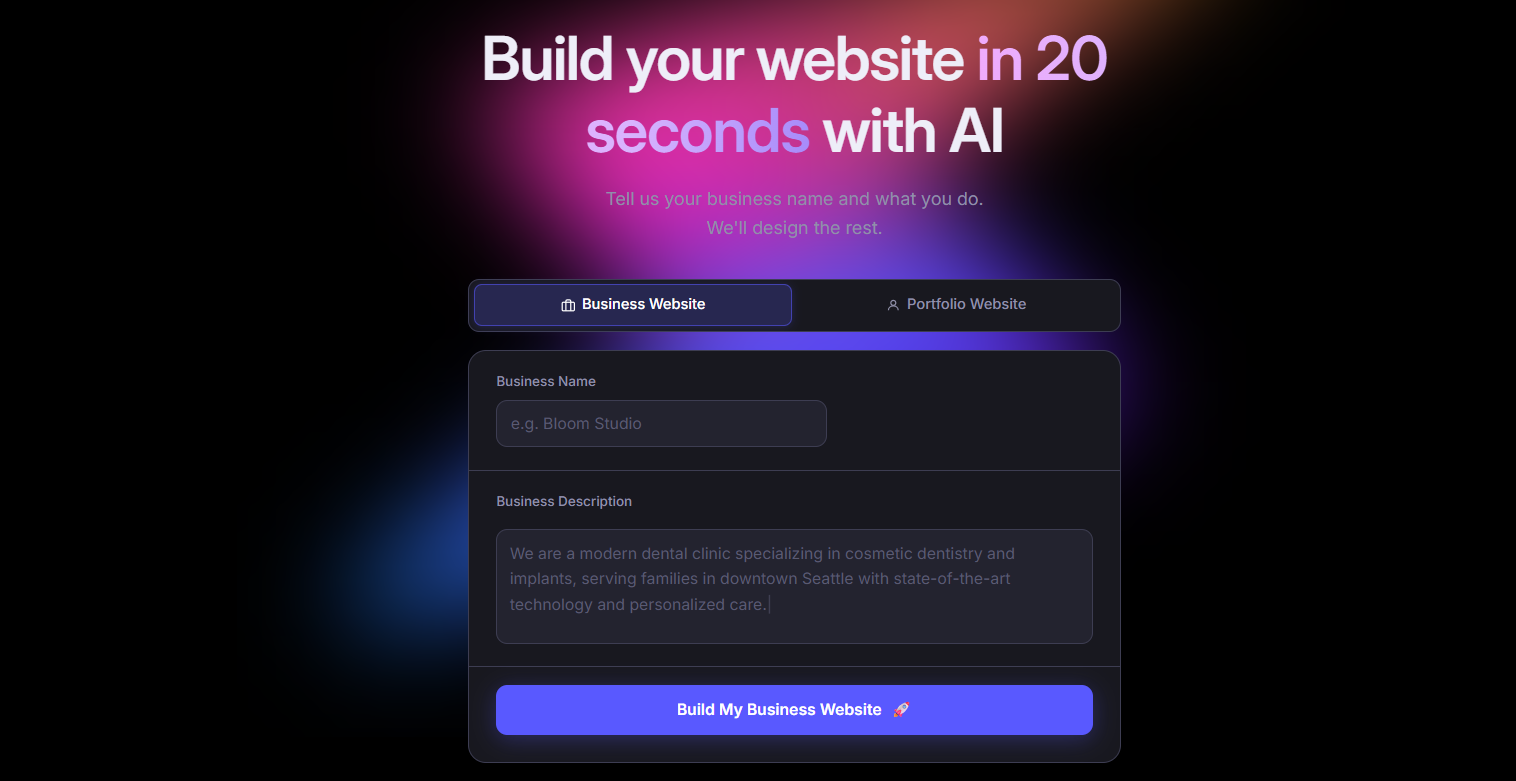
Butternut AI is built for exactly this kind of use case. You describe your work, your background, or your business in a few sentences, and the platform generates a complete portfolio, including structure, layout, and copy, in about 20 seconds. It has a dedicated portfolio builder mode for creatives, which means the output is formatted like a portfolio rather than a generic website template you have to rework.
What makes it a stronger option than Lovable for portfolio work specifically is the combination of purpose-built structure and simplicity. From nothing to a published portfolio in under 10 minutes, Butternut AI is the most direct path.
- Dedicated AI portfolio builder mode that structures your site around your work samples, bio, and project pages from the start, not a generic website you retrofit later.
- Resume parsing to auto-populate your experience and work history without typing everything out manually.
- Built-in AI blog writer and automated SEO with meta tags, sitemaps, and keyword guidance on paid plans.
- AI chatbot agent trained on your site data, so visitors can ask questions directly on your portfolio.
Best For: Freelancers, designers, developers, and creatives who want a fast, portfolio-specific setup without the complexity of an app builder.
| Plan | Price |
|---|---|
| Free | Available (build and test, no custom domain) |
| Starter | $5/month |
| Pro | $12/month |
2. Manus
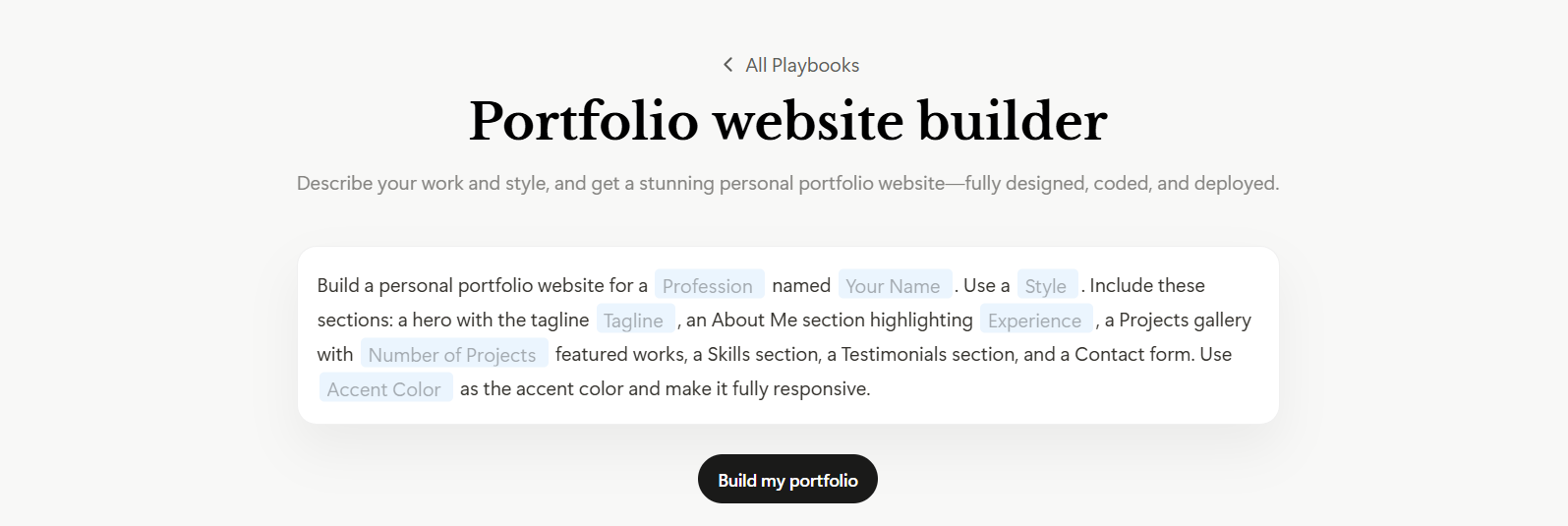
Manus is an autonomous AI agent that builds full-stack portfolio websites from conversational prompts. It researches design principles and current trends before generating anything, which tends to produce more polished and original output than tools that fill in a pre-built layout. You describe what you want, and Manus handles the code, database, authentication, and deployment automatically.
Compared to Lovable, Manus takes a more research-first approach to generation and includes a wider set of integrations out of the box, including Figma import, Stripe, GitHub, Slack, and Google Calendar.
- Full-stack portfolio generation from a single prompt, with frontend, backend, database, auth, and deployment all configured automatically.
- Research-first AI that analyzes design trends before building, producing more considered output than template-based tools.
- Figma design import so you can bring existing mockups directly into the build process.
- Stripe payment integration for portfolios that also sell services or products.
Best For: Technical professionals, full-stack developers, and product designers who want high-quality, custom-built portfolio output and don't mind working with a more complex AI agent.
| Plan | Price |
|---|---|
| Free | $0 (300 daily refresh credits, 1 concurrent task) |
| Standard | $20/month |
| Customizable | $40/month |
| Extended | $200/month |
3. Figma Make
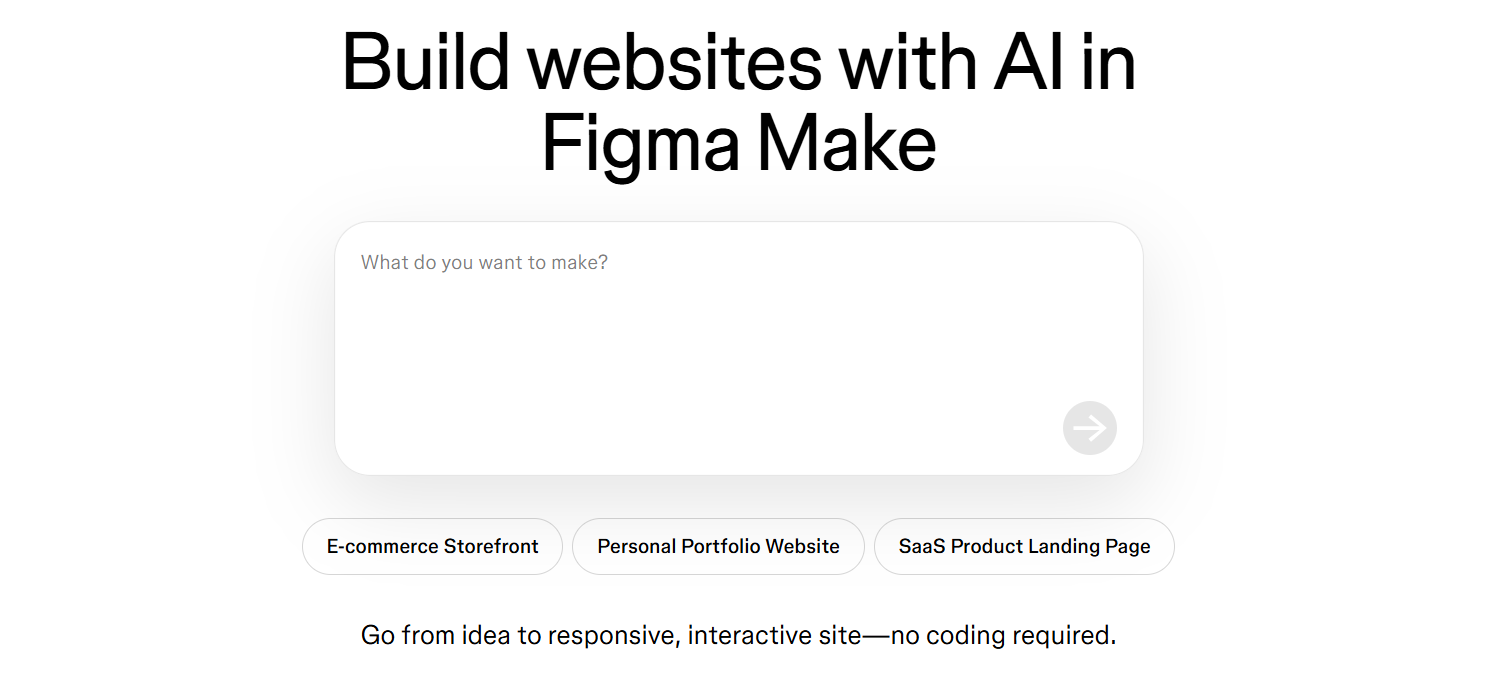
Figma Make is an AI generation tool built directly into Figma that lets you go from a text prompt or an existing design to a published portfolio without switching platforms. It uses your existing component libraries to generate on-brand output, a significant advantage if you've already done design work in Figma. You publish directly to Figma Sites from the same file you use for everything else.
For designers, this is a compelling option over Lovable because you stay in the tool you already know. No need to manage a separate app builder, import designs, or keep two platforms aligned.
- Prompt-to-UI generation that uses your existing Figma component libraries, so output stays on-brand automatically.
- Figma Sites lets you publish your design as a live portfolio directly from the Figma canvas, with no export or migration required.
- Real-time collaboration within the same Figma file so the whole team works in one place throughout.
- Supabase database integration for portfolios that need to display live or dynamic data.
Best For: UI/UX designers, product designers, and design teams who are already working in Figma and want to publish their portfolio without switching to a separate tool.
| Plan | Price |
|---|---|
| Starter | Free (150 AI credits/day) |
| Professional (Full seat) | $20/month |
| Dev seat | $12/month |
| Organization | $55/month per seat (annual only) |
| Enterprise | $90/month per seat (annual only) |
4. Wix AI Portfolio Generator

Wix's AI portfolio generator uses a combination of conversational AI and image-clustering technology to build a portfolio from uploaded media and a text prompt. It auto-categorizes your work into titled projects with AI-written descriptions, removing most of the manual organization that other tools expect you to handle yourself. Wix also tracks how your portfolio appears on AI search platforms like ChatGPT and Perplexity, a feature no other tool on this list offers.
- AI image-clustering that automatically organizes your uploaded work samples into categorized projects with titles and descriptions.
- AI search visibility tracking showing how your portfolio appears on ChatGPT, Perplexity, and Claude, unique to Wix among portfolio builders.
- Aria AI agent for generating pages, sections, copy, and images from prompts within the editor.
- Built-in email marketing, social media scheduling, and Google Analytics integration.
- 900+ templates and a centralized media dashboard for managing all your assets in one place.
Best For: Freelancers, photographers, illustrators, and creative professionals who want a feature-complete portfolio with strong SEO capabilities and a long-term platform to grow into.
| Plan | Price |
|---|---|
| Free | Full editor + AI tools, Wix branding and subdomain |
| Light | $17/month |
| Core | $29/month |
| Business | $36/month |
| Business Elite | $159/month |
5. Gamma
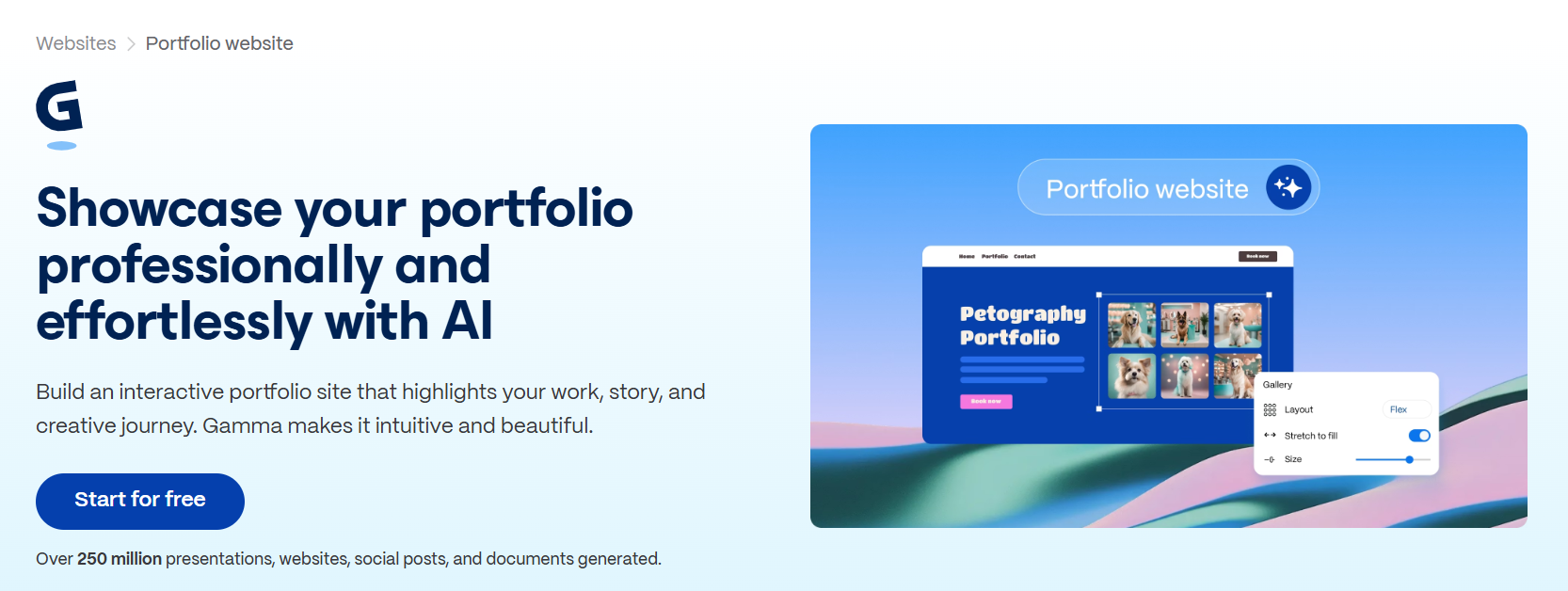
Gamma is an AI platform that builds presentations, documents, and websites from text prompts in under 60 seconds. For portfolio use, it generates web-native portfolio pages and case study sites that you can publish immediately.
The tradeoff is format. Gamma uses a card-based web layout that doesn't map directly to traditional portfolio structures. There are no case study templates with defined process sections or multi-page project views. It's best for people who need a clean, shareable portfolio page quickly and aren't attached to a conventional layout.
- Import from PDF, PPTX, Word, or a URL to instantly turn existing work documents into a portfolio page.
- Google Indexing for published sites so your portfolio has a chance to appear in search results.
- Real-time collaboration and an API for teams generating portfolios programmatically at scale.
Best For: Job seekers, students, consultants, and early-career creatives who need a shareable portfolio quickly and want a low-cost entry point.
| Plan | Price |
|---|---|
| Free | $0 (400 AI credits, Gamma branding on published sites) |
| Plus | $12/month |
| Pro | $25/month |
| Ultra | $100/month |
6. Canva Portfolio Builder
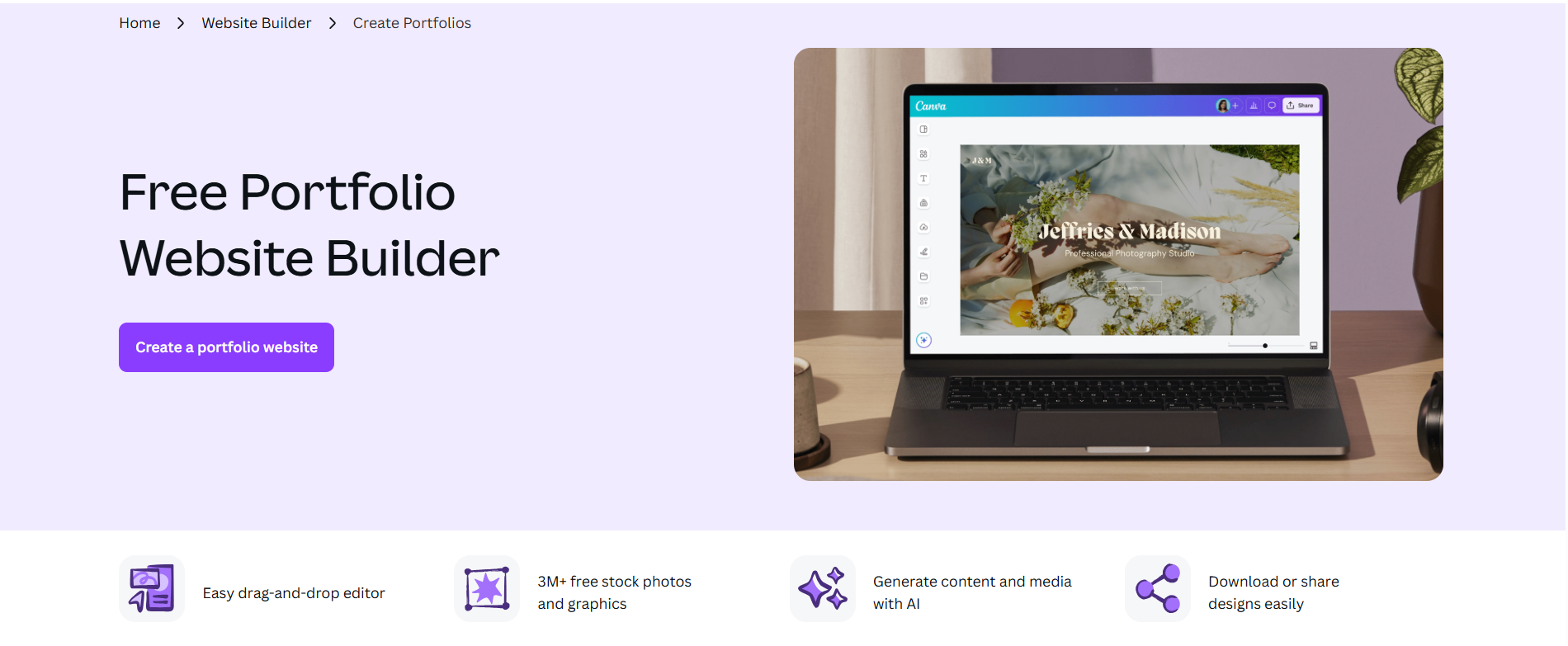
Canva is one of the most widely used design tools available. Its portfolio builder gives you access to 250,000+ templates and Magic Studio AI, a suite that covers text-to-image generation, AI copywriting, background removal, and image expansion. You publish as a live website through Canva Websites.
The main advantage over Lovable here is familiarity. A large number of people already use Canva for social media, presentations, and documents, so your portfolio just becomes one more thing that lives in the same subscription.
- 250,000+ portfolio and design templates, with Magic Studio AI generating images, copy, and layout variations on demand.
- Brand Kit for applying custom fonts, colors, and logos consistently across all your designs and your published portfolio.
- Publish as a live website directly from Canva, with custom domain support on Pro plans.
- 100M+ stock photos, illustrations, and videos available from the design canvas.
- Real-time collaboration with comments and version history, plus exports to PNG, PDF, and MP4 formats.
Best For: Visual artists, illustrators, photographers, and marketers who already use Canva and want their portfolio to live in the same ecosystem as the rest of their design work.
| Plan | Price |
|---|---|
| Free | $0 (250,000+ templates, 5GB storage, limited AI tools) |
| Pro | $15/month |
| Teams | $21/user/month (billed monthly) |
| Enterprise | Custom pricing |
7. Emergent
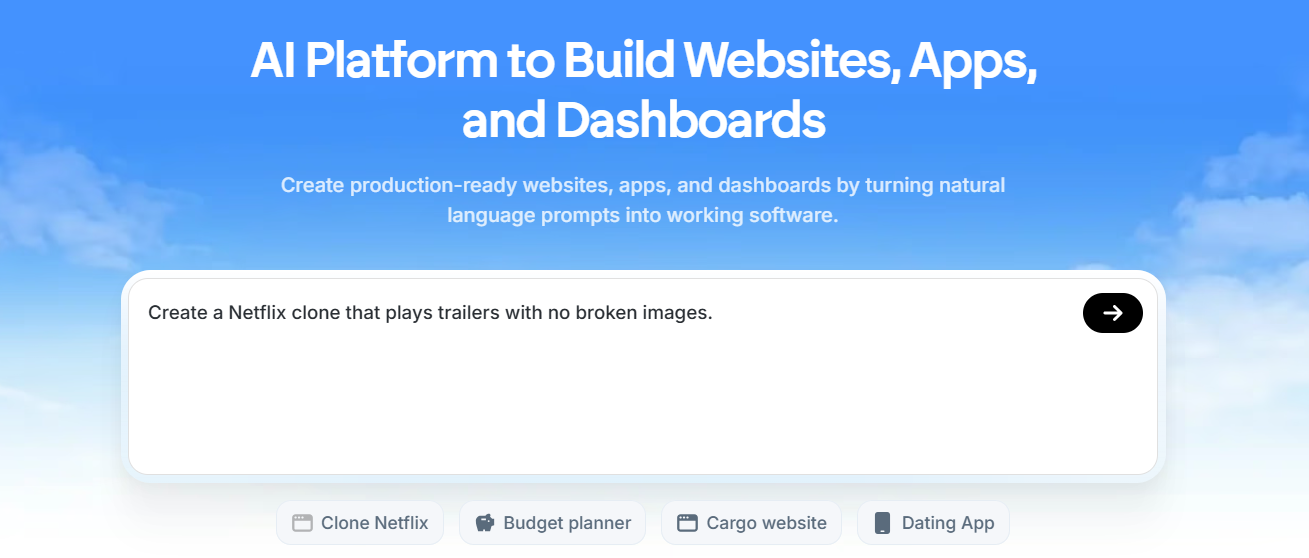
Emergent is a full-stack app builder that generates web and mobile applications. What sets it apart from Lovable is native mobile app generation. You can build a portfolio that works as both a web app and a native mobile app from a single prompt.
Like Lovable, it's an app builder first and a portfolio builder by extension. There are no portfolio-specific templates, no case study structures, and no built-in SEO tools, which is a real gap if organic search visibility matters to you.
- GitHub integration with private repository support on paid plans, so your code is always yours to take elsewhere.
- Built-in database, authentication, Stripe payments, and integrations with Slack, Airtable, Notion, and Google Sheets.
- Task forking to branch your work before making risky changes, useful when experimenting with portfolio layout iterations.
Best For: Developers and technical creators who want both a web and mobile portfolio and need full-stack functionality built into the same platform.
| Plan | Price |
|---|---|
| Free | $0 (10 credits/month) |
| Standard | $20/month |
| Pro | $200/month |
| Team | $300/month |
8. Visme
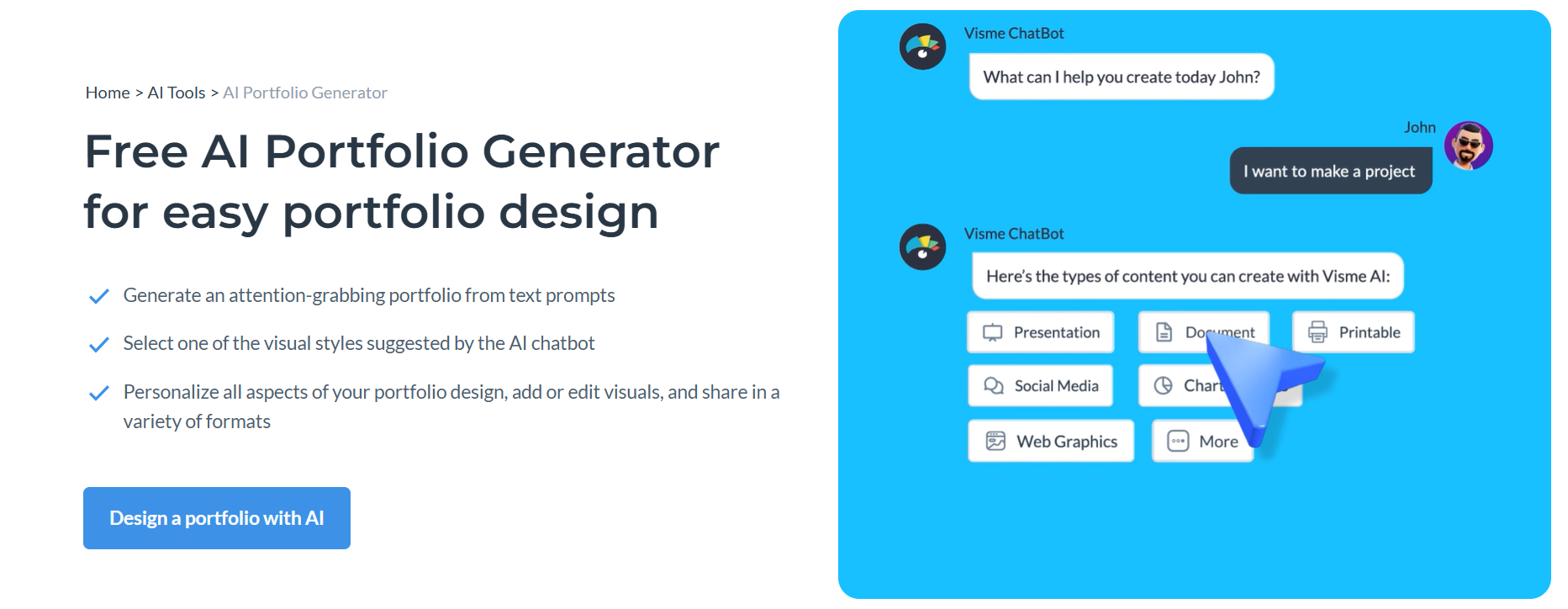
Visme is a visual content platform used by organizations including IBM, Gartner, and Golden State Warriors. It covers presentations, infographics, reports, social graphics, and portfolio-style websites, with AI that generates complete designs from prompts in under two minutes. The standout feature for portfolio work is live data integration. Your case studies and project metrics can pull from Google Sheets, Salesforce, or HubSpot and update automatically.
It's not a purpose-built portfolio tool, and getting portfolio-specific layouts requires more initial setup than dedicated builders, but for data-driven professionals, the integration depth is worth the extra effort.
- Live data integration with Google Sheets, Google Analytics, Salesforce, and HubSpot so metrics in your portfolio case studies update automatically as the underlying data changes.
- Brand Wizard that automatically extracts your brand colors, fonts, and logo from any website URL.
- 16+ chart types including Mekko, waterfall, and Gantt for case studies that rely heavily on data visualization.
- Presenter Studio for recording a screen walkthrough with voiceover directly within the platform.
Best For: Marketing managers, growth professionals, data analysts, and strategists whose portfolio work centers on metrics and results they want to keep current automatically.
| Plan | Price |
|---|---|
| Free | $0 (limited projects, JPG downloads only, Visme watermark) |
| Starter | $29/month |
| Pro | $59/month |
| Enterprise | Custom pricing |
How to Make the Right Choice
- If you want the fastest setup with the least friction, look for tools that get you from nothing to published without needing to configure a backend, manage credits carefully, or adapt a tool that wasn't built for portfolios.
- If you're a designer who already has an established design workflow, look for tools that let you publish directly from your existing environment without switching platforms or rebuilding your designs.
- If SEO matters for your portfolio's discoverability, prioritize tools with strong out-of-the-box SEO support. Some tools in this category have minimal SEO functionality, which is a real gap for long-term visibility.
- If your portfolio needs to display live performance data, look specifically for tools that natively connect to data sources like Google Sheets or CRM platforms. Most tools here don't support this at all.
- If you want full hosting independence, look for tools that let you export your site and host it wherever you choose, rather than locking you into a specific platform.
Our Suggestion
If you're switching away from Lovable because of the credit system, Supabase configuration overhead, or lack of portfolio-specific structure, Butternut AI is the most direct replacement.
The generation process starts with your creative or professional context, so the output, including structure, copy, and SEO, is shaped around what you actually do rather than a generic app template. Editing happens directly on the page, which is a noticeably simpler experience than iterating through an AI agent that might consume credits in the process. And unlike Lovable, everything you need to go live is already included: hosting, SSL, and a free domain for the first year come with the plan.
You can build your portfolio today for free. You only pay when you're happy with it and ready to publish.