
Butternut AI Blog
9 Manus Alternatives for AI Portfolio Building in 2026
If you're looking for a Manus alternative to build your portfolio, we've compared 9 tools so you can find the one that actually fits your workflow.
Introduction
Manus is an autonomous AI agent that can build full-stack portfolio websites from conversational prompts. It researches design principles before generating, handles backend logic, and deploys everything automatically. For technical users who want a portfolio that goes beyond a simple static site, it can produce genuinely impressive results.
That said, Manus wasn't built specifically for portfolios. Its credit-based pricing is unpredictable and complex tasks can drain your monthly allocation fast, and there's no way to preview the cost before you start. The platform was acquired by Meta in December 2025, and that deal is currently under regulatory scrutiny in China, which has created uncertainty around the product's future. If you're primarily building a portfolio and not a full-stack app, there are better-suited tools available at a fraction of the cost.
TL;DR
- Best overall alternative: Butternut AI
- Best for presentations turned portfolios: Gamma
- Best for design-led portfolios: Canva or Figma Make
- Best for developer portfolios: Locofy
- Best budget option: Codedesign.ai
Why You Might Be Looking For A Manus Alternative
Manus works well in certain contexts, but a few patterns keep coming up from users who've tried it for portfolio use specifically:
- Credit costs are unpredictable: Manus uses a credit-based system, and complex builds can burn through your monthly allowance quickly. There's no way to see how much a task will cost before you start, which makes budgeting difficult.
- It's overkill for most portfolios: Manus is built for full-stack app generation. If you just need a clean portfolio site with project pages and contact form, you're paying for infrastructure you don't need.
- Unused credits expire: Credits reset at the end of each billing cycle. Any that you don't use are gone, even on the $40/month plan.
- No resume parsing or portfolio-specific features: Manus doesn't have a way to import your resume or LinkedIn to auto-populate your portfolio. You're describing everything from scratch in a chat interface.
9 Best Manus Alternatives in 2026
| Tool | Hosting | Custom Domain | Resume Parsing | AI Article Gen | Automated SEO | Lead Capture | Starting Paid Plan |
|---|---|---|---|---|---|---|---|
| Butternut AI | Yes (free 1yr) | $5/mo | |||||
| Gamma | Yes (Pro, $20/month) | $12/mo | |||||
| Canva | Yes (Pro, $15/month) | Basic only | Yes (paid) | $15/mo | |||
| Codedesign.ai | Yes (all plans) | $15/mo | |||||
| Visme | Yes (Pro, $25/month) | Basic | Yes (Pro) | $29/mo | |||
| Figma Make | Yes (Sites) | Yes (paid plans) | Partial | $20/mo | |||
| Lovable | Yes (+ Supabase) | Yes (Pro) | Basic | $25/mo | |||
| Emergent | Yes (paid) | Yes (paid) | $20/mo | ||||
| Locofy | $40/mo |
1. Butternut AI
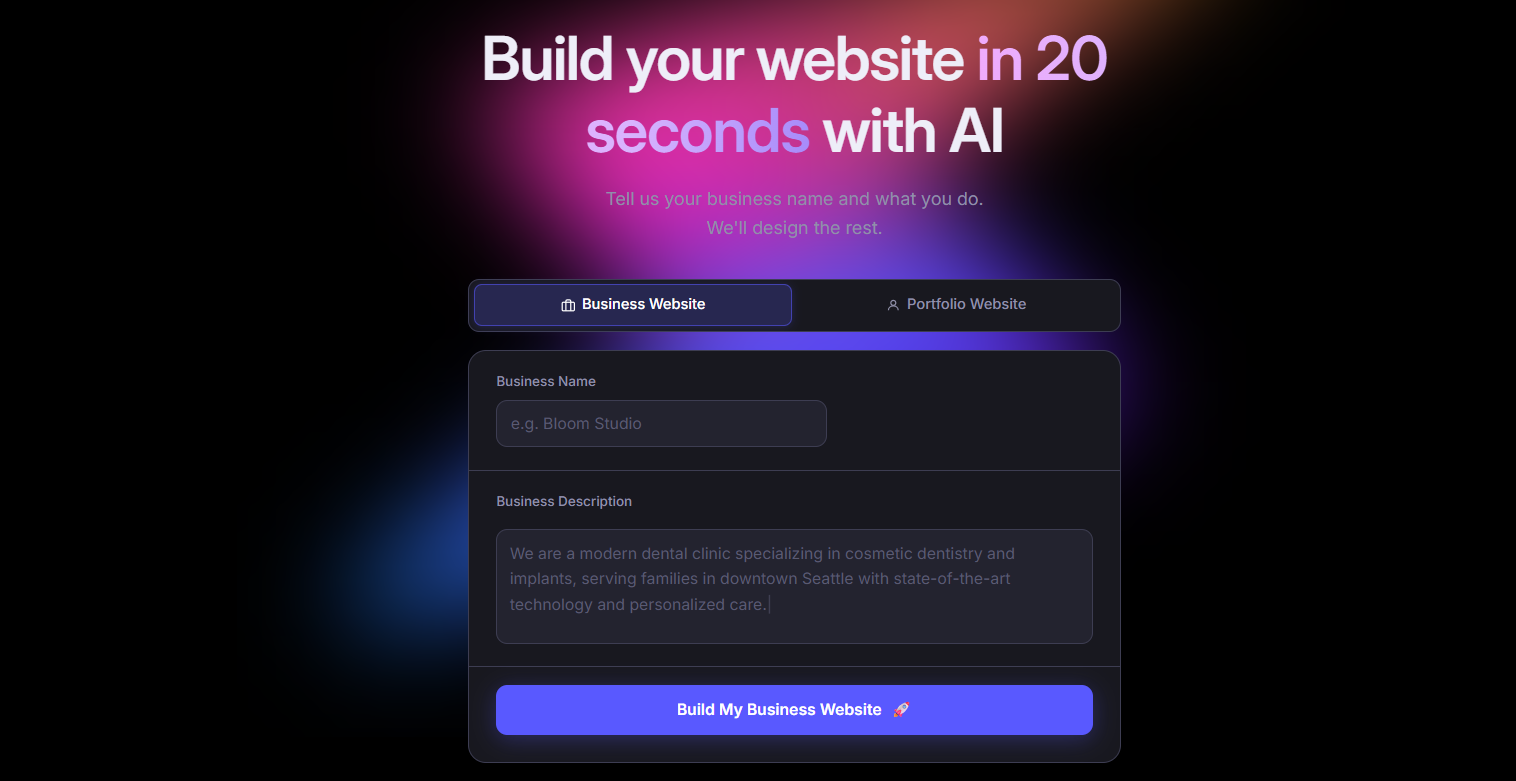
Butternut AI is an AI portfolio and website builder that generates a complete, structured site from a short description of your work in about 20 seconds. Unlike Manus, which approaches portfolio creation as a full-stack engineering task, Butternut AI is purpose-built for the output you actually need, a live, well-structured portfolio with copy, project pages, SEO, and hosting, all included.
You can import from your resume or LinkedIn, and the AI fills in project descriptions, layout, and structure based on your real experience. Editing happens directly on the page, so iterating is fast. Compared to Manus, Butternut AI is significantly cheaper, produces results without requiring any prompting experience, and doesn't burn through a credit pool just to fix a layout issue.
- You can go from a text prompt to a fully deployed portfolio in under 10 minutes, including hosting and a free domain for the first year on paid plans.
- The resume and LinkedIn import feature automatically populates project titles, descriptions, and experience sections, so you're refining rather than writing from scratch.
- Built-in AI blog writer lets you publish case studies and long-form content directly, which helps with SEO over time.
- An AI chatbot agent can be trained on your portfolio's content to handle visitor questions automatically.
- Automated SEO handles meta tags, sitemaps, and keyword guidance without needing a separate tool.
Best For: Designers, developers, freelancers, and creatives who want to go from idea to live portfolio quickly, without dealing with unpredictable credits or overkill infrastructure.
Pricing:
| Plan | Price |
|---|---|
| Starter | $5/mo |
| Pro | $12/mo |
2. Gamma
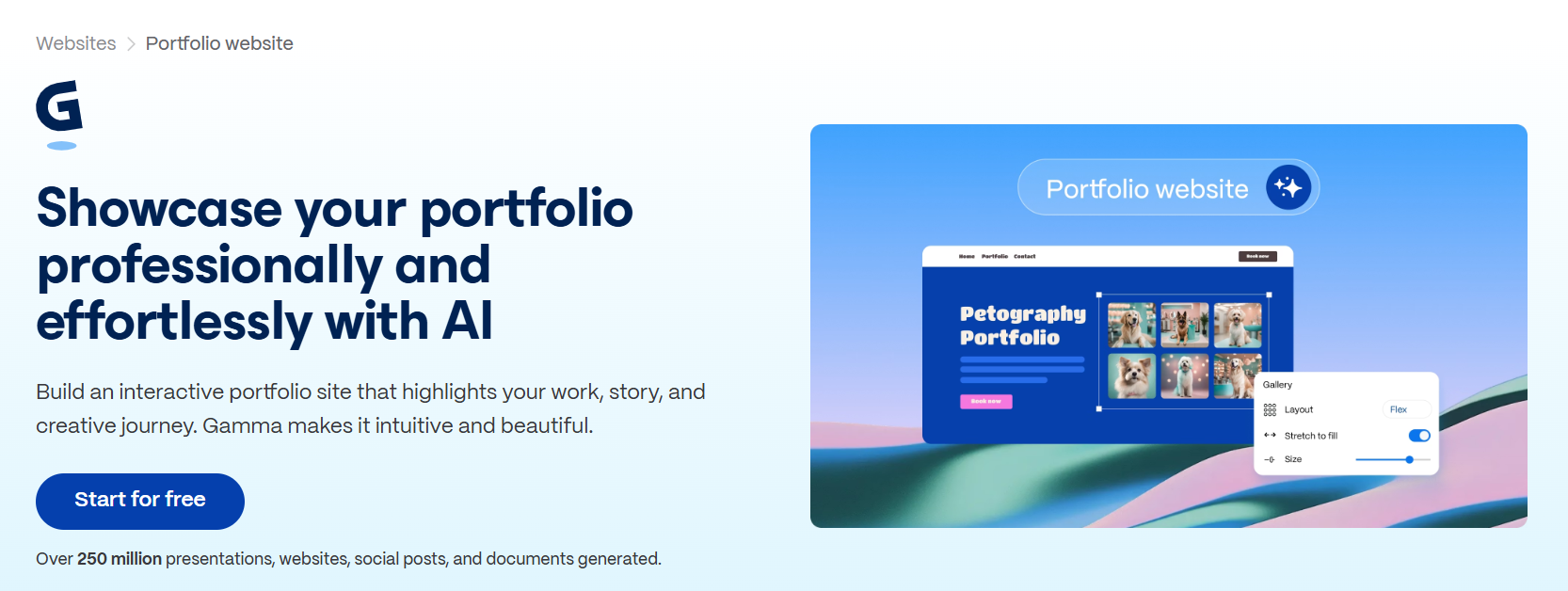
Gamma is an AI platform used by 70M+ people that generates presentations, documents, and websites from text prompts in under 60 seconds. For portfolio use, it works well for creating case study pages, project landing pages, and visual portfolio sites from a prompt or an uploaded document like a PDF or PPTX.
You can import an existing document like a case study PDF or a slide deck and Gamma will turn it into a polished, publishable web page in under a minute. That's a different workflow than Manus, and for creatives or consultants who already have content in other formats, it's genuinely useful.
- Import from PDF, Word, PowerPoint, or a URL and convert it into a live web portfolio page automatically.
- Google Indexing is supported for published sites, which helps your portfolio get found through search.
- Export to PDF, PPTX, PNG, and Google Slides, useful if you want to repurpose your portfolio content elsewhere.
Best For: Consultants, strategists, UX designers, and creative professionals who want to turn existing project documentation into a clean, published portfolio quickly.
Pricing:
| Plan | Price |
|---|---|
| Plus | $12/mo |
| Pro | $25/mo |
| Ultra | $100/mo |
3. Canva Portfolio Builder
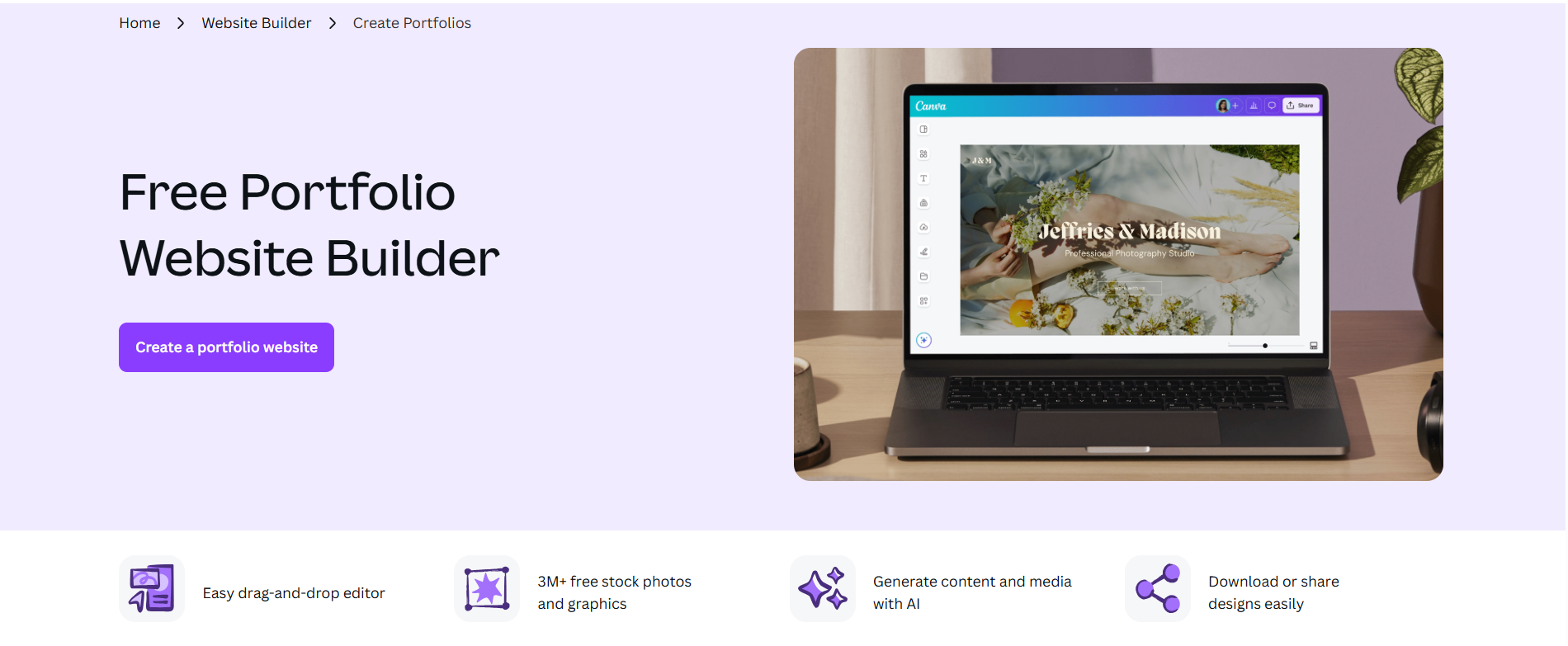
Canva is the most widely used design platform in the world, with 220M+ users. Its website builder, Canva Websites, lets you create and publish portfolio sites using its drag-and-drop editor, 250,000+ templates, and Magic Studio AI tools. If you're already using Canva for your social posts, presentations, or client decks, building your portfolio there means everything stays in one place.
The Brand Kit feature ensures consistent fonts, colors, and logos across everything you publish. something Manus doesn't offer at all. For non-technical creatives who care about visual consistency, Canva is a more practical choice than Manus.
- 250,000+ templates cover portfolio pages, case studies, and project showcases, there's a starting point for nearly any creative field.
- Magic Studio handles AI image generation, background removal, copy writing, and photo editing all within the same workspace.
- Brand Kit lets you lock in fonts, colors, and logos so every page of your portfolio stays on-brand automatically.
- Real-time collaboration with comments and version history makes it easy to work with clients or get feedback from peers.
Best For: Photographers, illustrators, graphic designers, and visual creatives who want a portfolio that doubles as a design showcase — and already use Canva for other work.
Pricing:
| Plan | Price |
|---|---|
| Pro | $15/month (or $10/month billed annually) |
| Teams | $21/user/month (billed monthly) |
| Enterprise | Custom |
4. Codedesign.ai
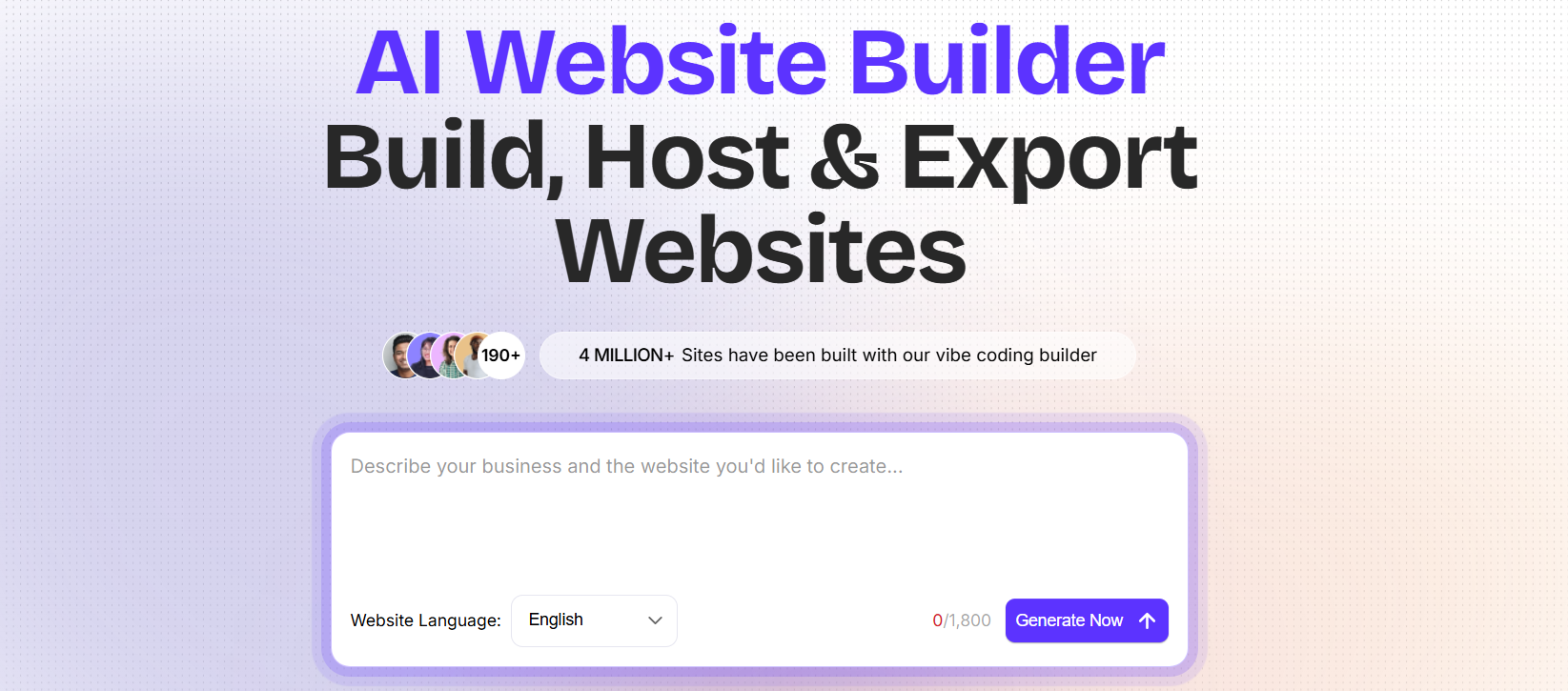
Codedesign.ai is an AI website and portfolio builder that generates responsive websites from a prompt, includes a drag-and-drop no-code editor, and lets you export clean HTML/CSS or React code.
For portfolio builders who want to avoid vendor lock-in, the full code export on the Agency plan ($99/mo) is a significant advantage over Manus. You own your code and can deploy it anywhere. The platform also includes built-in SEO tools on all plans, which makes it a strong option for freelancers who don't want a recurring subscription.
- Publish to CodeDesign hosting, a custom domain, or WordPress with a single click.
- Full HTML/CSS and React code export on the Agency plan gives you complete ownership of your portfolio code.
- Built-in SEO tools are available on all plans, including the Individual plan.
- Form data collection integrates with Zapier, so you can route contact form submissions anywhere in your workflow.
Best For: Freelancers, developers, and agency owners who want to publish quickly but also want the option to own and export their code without being tied to one platform.
Pricing:
| Plan | Price |
|---|---|
| Free | Available |
| Individual | $15/mo |
| Growth | $29/mo |
| Agency | $99/mo |
5. Visme
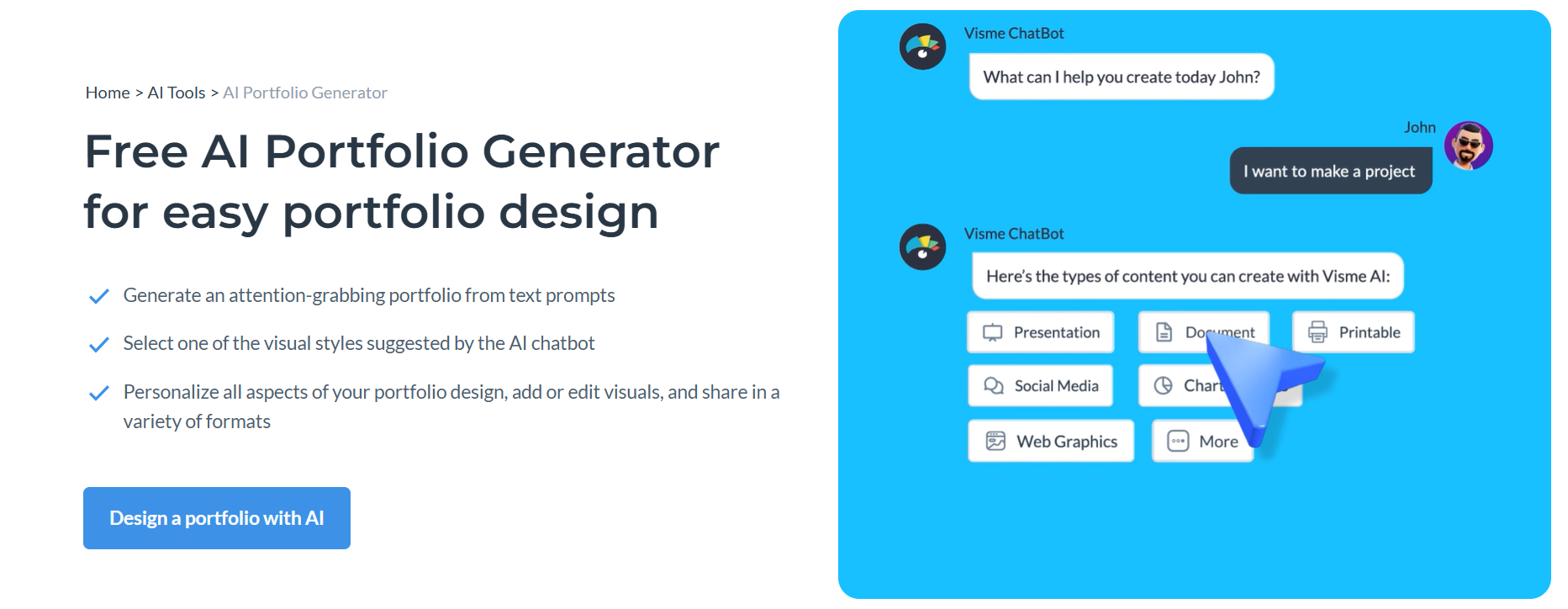
Visme is a visual content platform with users at companies like IBM, Gartner, and the Golden State Warriors. It covers presentations, infographics, reports, social graphics, and portfolio-style websites. The AI Design Generator creates complete designs from prompts in under 2 minutes.
What makes Visme genuinely different from Manus is the live data integration. On the Pro plan, portfolio case studies and metrics can pull live data from Google Sheets, Salesforce, and HubSpot, and update automatically.
- Live data integration on the Pro plan lets portfolio metrics update automatically from Google Sheets, Salesforce, HubSpot, and Google Analytics.
- Brand Wizard extracts your brand colors, fonts, and logo from any existing website URL automatically.
- 16+ chart types, including Mekko, waterfall, and Gantt, let you visualize project results and timelines directly in your portfolio.
- Presenter Studio lets you record a screen walkthrough with voiceover inside the platform, so you can add video case studies without third-party tools.
- Published portfolios can be shared as live URLs, embedded on any site, or downloaded in multiple formats.
Best For: Marketing professionals, consultants, UX researchers, and data-driven creatives who need portfolios that showcase measurable results — not just visual work.
Pricing:
| Plan | Price |
|---|---|
| Starter | $29/mo |
| Pro | $59/mo |
| Enterprise | Custom |
6. Figma Make
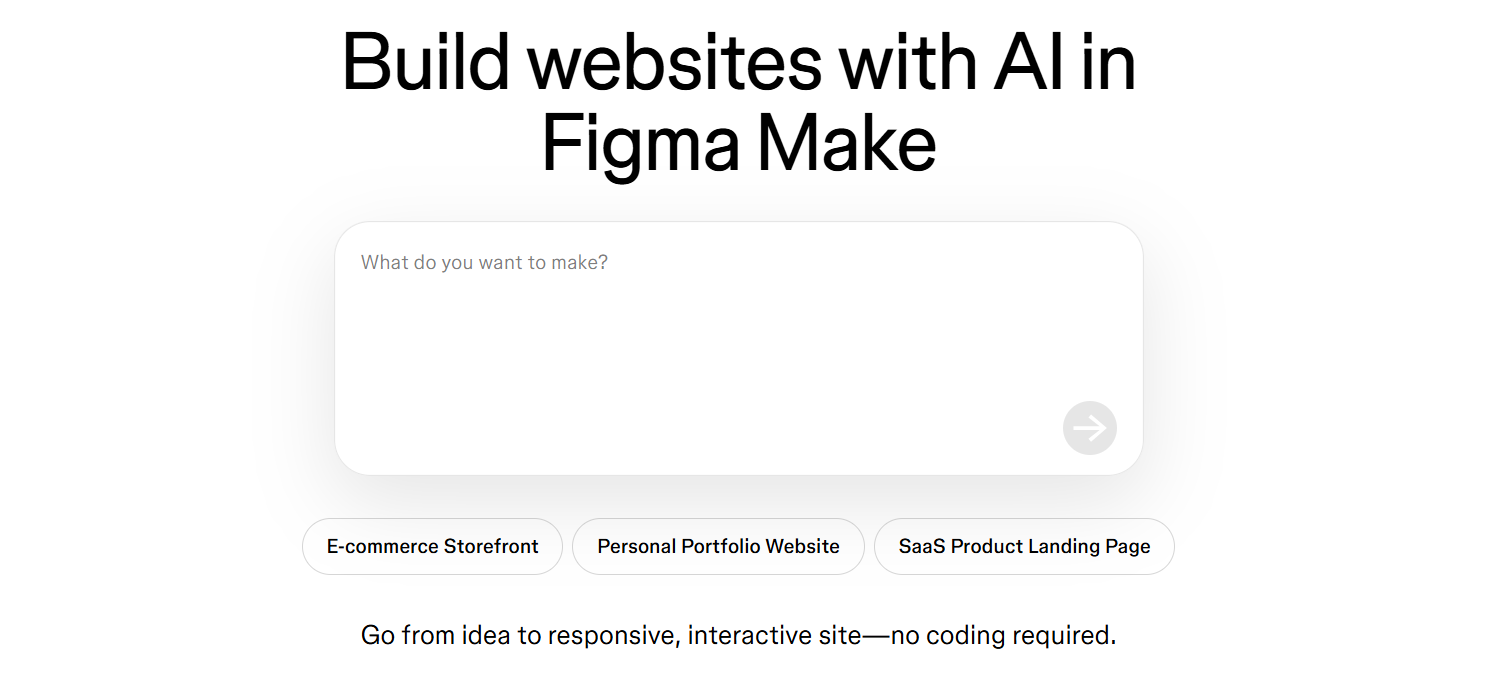
Figma Make is an AI website builder built directly inside Figma, the design tool used by most professional product designers. It generates UI screens and websites from text prompts, using your existing Figma component libraries and design tokens.
If you're already working in Figma, the workflow advantage here is significant. You're not rebuilding your portfolio from scratch in a new tool, you're publishing work you've already designed. For portfolio use specifically, the MCP server integration means AI coding tools like Cursor can read your Figma layouts and generate frontend code directly, which is useful if you're planning to build a custom-coded version later.
- Prompt-to-UI generation uses your existing Figma component libraries, so AI-generated designs match your established visual language.
- Figma Sites publishes your designs as live websites directly from Figma.
- MCP server integration lets AI coding tools like Cursor read your Figma layouts and generate production-ready code.
- Real-time collaboration happens inside your existing Figma file, so the portfolio design process stays in one place.
- Interactive prototypes with clickable elements can be created before publishing, so you can test the experience first.
Best For: Product designers, UX designers, and design-led developers who already live in Figma and want to publish their portfolio without rebuilding it in a separate tool.
Pricing:
| Plan | Price |
|---|---|
| Starter | Free (150 AI credits/day) |
| Professional (Full seat) | $20/mo |
| Dev seat | $12/mo |
| Collab seat | $3/mo |
| Organization | $55/mo/seat (annual only) |
| Enterprise | $90/mo/seat (annual only) |
7. Lovable
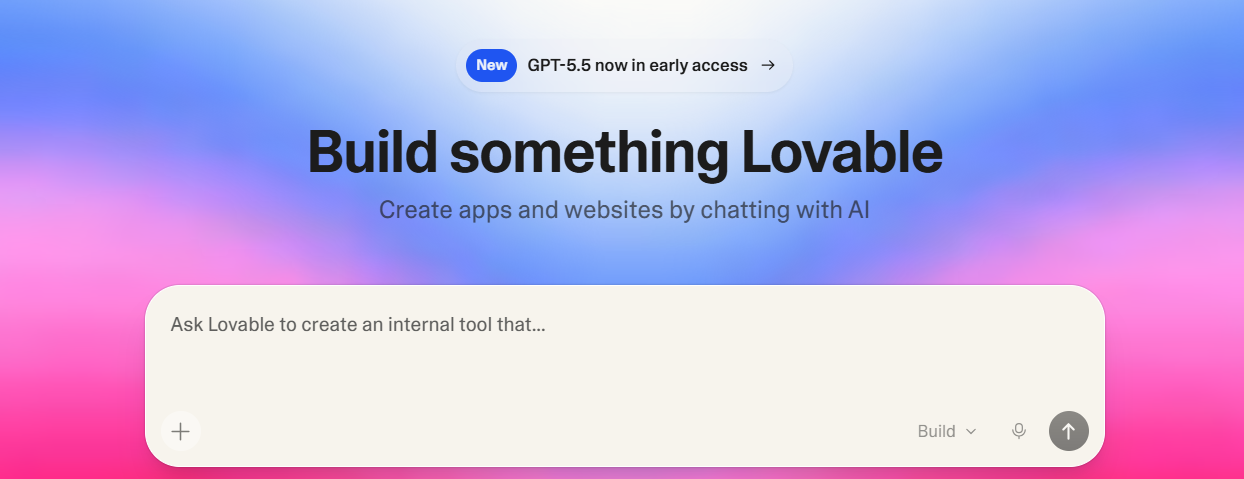
Lovable is an AI full-stack web app builder that generates React and TypeScript applications from natural language prompts, with Supabase for the backend and GitHub sync for version control. It can produce a functional, deployed app in under 10 minutes. For portfolios that need interactive features, like project filtering, contact forms with database storage, or client login areas, Lovable is faster than building from scratch.
Compared to Manus, Lovable is more accessible for non-technical users. The visual editor lets you make no-code adjustments after the AI generates the initial build, and real-time collaboration is available on free public projects.
Pricing:
| Plan | Price |
|---|---|
| Free | $0 (10 credits/month) |
| Standard | $20/mo |
| Pro | $200/mo |
| Team | $300/mo |
8. Emergent
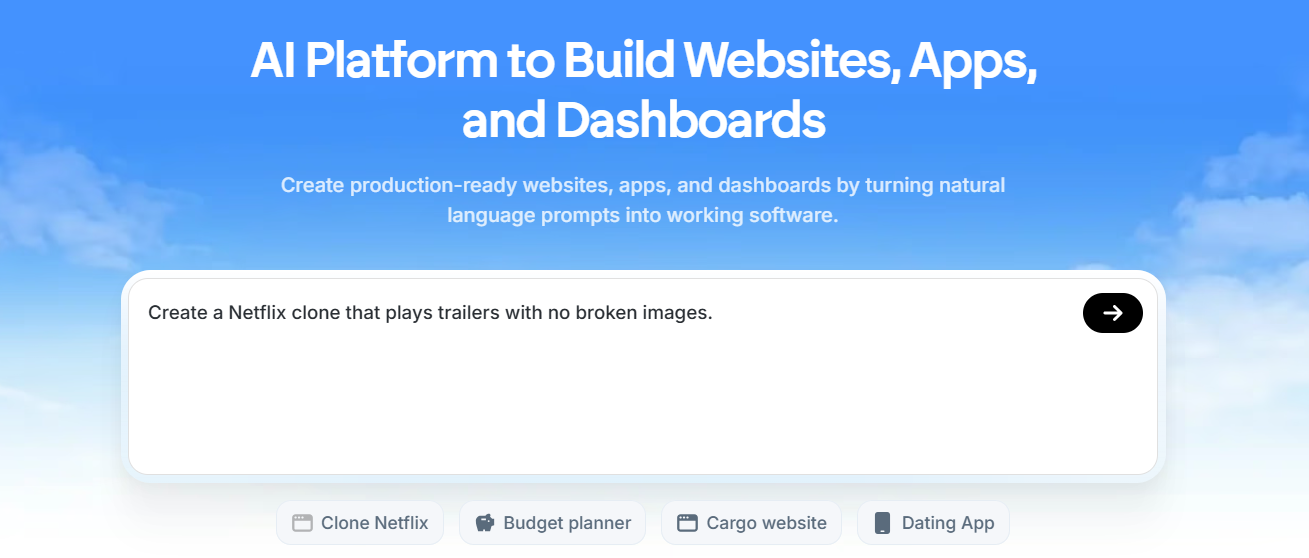
Emergent is an autonomous AI app builder with 6M+ users across 190+ countries. It raised a $70M Series B at a $300M valuation and builds full-stack web and mobile apps from simple prompts. It generates a portfolio as both a web app and a mobile app from a single prompt, so your work is accessible on any device without a separate mobile build.
For portfolio use, the native mobile app generation is the clearest differentiator from Manus. Credit top-up packs that never expire ($8 for 50 credits) are also a more predictable option than Manus's expiring monthly credits.
- Generates both web and mobile apps from a single prompt, so your portfolio works natively on iOS and Android without separate development.
- Credit top-up packs never expire, unlike Manus's monthly reset system.
- SOC2-certified infrastructure with deployments across 100+ countries, reliable for portfolios that need to be accessible globally.
Best For: Mobile developers, app designers, and technical creatives who want their portfolio to function as a native mobile app as well as a website.
Pricing:
| Plan | Price |
|---|---|
| Free | $0 (10 credits/month) |
| Standard | $20/mo |
| Pro | $200/mo |
| Team | $300/mo |
9. Locofy
Locofy is a design-to-code conversion tool that transforms Figma and Penpot designs into production-ready frontend code. It's not a traditional portfolio builder; you design your portfolio in Figma first, then Locofy converts it to clean React, Next.js, Vue, Angular, Flutter, or HTML/CSS code automatically.
This is a very different workflow from Manus. Rather than describing a portfolio to an AI agent, you design it visually and let Locofy handle the development output. For designers who are comfortable in Figma but don't want to write frontend code, Locofy eliminates a significant bottleneck. The trade-off is that it requires a well-structured Figma file and produces no content, copy, or SEO.
- Converts Figma and Penpot designs into production-ready code in React, Next.js, Vue, Angular, Flutter, and HTML/CSS.
- Locofy Lightning handles one-click conversion for simple to medium-complexity designs.
- Component mapping lets you match design elements to existing code components in your project, so generated code fits into your existing codebase.
- Interaction and animation export preserves transitions and hover states from your Figma prototype in the generated code.
Best For: Frontend developers and design engineers who want to convert an existing Figma portfolio design into clean, deployable code — without writing it by hand.
Pricing:
| Plan | Price |
|---|---|
| Pay-As-You-Go | $0.40/LDMtoken |
| Hobby | $40/mo |
| Pro | $80/mo |
| Enterprise | Custom |
How to Make the Right Choice
Manus is a capable tool, but most people building a portfolio don't need a full-stack autonomous AI agent. Here's what to focus on when choosing an alternative:
- Purpose-built vs. general-purpose: Tools like Butternut AI and Codedesign.ai are designed for portfolio and website creation specifically. Manus is a general-purpose agent. If you don't need backend infrastructure, there's no reason to pay for it.
- Pricing model: Credit-based pricing (Manus, Lovable, Emergent) is harder to budget than flat monthly plans. Know what you're committing to before you start building.
- SEO: If you want people to find your portfolio through search, check for automated SEO, sitemap generation, and meta tag controls.
- Design workflow: If you're already in Figma, Figma Make or Locofy will fit naturally into how you work. If you're starting from scratch, a prompt-to-site tool like Butternut AI or Gamma is faster.
Our Suggestion
If your main goal is a live portfolio that looks professional, shows up in search results, and doesn't require a full-stack setup to maintain, Butternut AI is the clearest alternative to Manus.
The setup is fast. You describe your work, and the AI generates structure, copy, and layout in about 20 seconds. The resume import means you're not rewriting everything you've already documented elsewhere. Hosting, SEO, and a free domain for the first year are included on paid plans, so there's no additional infrastructure to configure.
The pricing is also more predictable than Manus. At $5/month, you know what you're paying each month. No credits to track, no expiry dates to manage.
You can build and preview your portfolio for free. You only pay when you're ready to publish it live.